War Letters – Morotai: 1 Feb 1945, Noemfoor; not a plane in sight

Noemfoor
Thursday
[1 Feb 1945]

Dear Jesso,

It looks as if I have been talking in a delirium.  It is understandable that I thought I was home – God knows I ought to have been.  Any bloody way I’m still waiting for a sanguinary plane and none is in sight. Oh Lord, why hast thou forsaken me?

All my little fums are to be so much air and fantasy, my little desires to be monuments of futility, and any welcomes to be jeering nothings.

I’ve given up predicting my arrival – it rests in the lap of the Lodestars.

What’s the point of my writing about nothing but sitting down near the strip waiting for a kite?

I hope I’ll be seeing my family one of these days.  Teach little Graham to speak nicely and to think well of his old pa overseas.  Be faithful dear, we shall soon start life anew.

Your old old husband, Remember?

Lotsa X’s

Bill

AWW 1945 Apr-21 P20 UPR CTR
The Australian Women’s Weekly, 21 Apr 1945, p20

That was Bill’s last letter. It is estimated he made it home by Sunday, 4 February 1945

War Letters – Morotai: 31 Jan 1945, Noemfoor; Am languishing for want of transport

AMERICAN RED CROSS letterhead

Noemfoor
Wednesday 31st Jan ’44
[31 Jan 1945]

[Note at top]

It’s worth it for a guilder

Dear Mrs Pidgeon,

Am languishing for want of transport and you. (and Bub of course!) My! But doesn’t he look well – the cleber lill debil.  Doesn’t look as if you have been fattening yourself up for me – anyway you’re still just as nice as you are. How nice will that be today – my little poppet?

Camp at Noemfoor
Camp at Noemfoor

This is a stinking hot island situated about 50 miles from the equator & although the breeze flowing in from the sea licks the body with a cool tongue it cannot altogether dispel the sweat.  It rolls with steady calculation down the chest.  I’ve got any amount of the stuff for the Weekly so I’m very conscious of the time wasted in getting home.

Anyhow now that I’m right here in the house how’s about it and a cuppa tea?  Are you pleased to see me home?  Lots of love darling give me bub for a while.

Willie

War Letters – Morotai: 29 Jan 1945, Morotai; To Daeo Village by Army Duck

AMERICAN RED CROSS letterhead

Morotai
Monday
[29 Jan 1945]

Darling,

I should be home by the end of the week.  I hope that pleases both you and young Graham.  Unfortunately I will not receive any letters from you now as I’m leaving this island in the morning and shall be staying a few days on another closer to home.  I would like to have known if the dear little chap has noticed my absence although it seems silly to think that he should – at his age at least.  I dare say that even 3 weeks will have caused a marked change in his size & behaviour – to my keen fresh eye.

I don’t know where the boys have gone so I’ll use Eddie’s machine for a while.  Went over one of the navy ships today and didn’t get back until after tea was over.  It was an eye-opener of a trip but I can’t say much about it in this letter.

Army Duck
Army Duck

Army Duck Army Duck Army Duck

Yesterday went up the coast in a “duck” (one of those amphibious motor vehicles you may have seen in the streets at times).  It is all so damn silly to be driving straight from a road in to the sea.  The authorities gave us permission to visit Daoe [Daeo, Daejo or Doewo]  village which is just outside the perimeter which is held by the yanks.  There are about 2300 natives in the little area.  Some are refugees from the Celebes and Borneo.

Native village, Morotai
Possibly Daeo Village, Morotai
21 x 11 cm
At Daeo Village
3 New Guinea and Morotai - 3 Morotai-91
Possibly Daeo Village, Morotai
3 New Guinea and Morotai - 3 Morotai-92
Possibly Daeo Village, Morotai
3 New Guinea and Morotai - 3 Morotai-94
Possibly Daeo Village, Morotai
Correspondents visit the local villagers at Morotai
Possibly Daeo Village, Morotai
3 New Guinea and Morotai - 3 Morotai-95
Possibly Daeo Village, Morotai
3 New Guinea and Morotai - 3 Morotai-96
Possibly Daeo Village, Morotai

I’ve never seen so many blooming children in one spot before – must have been about 4 to every adult.  The natives here are much more civilised than those of New Guinea.  Under Dutch control they are well looked after.  Schooling is compulsory and they are taught to speak and write Malay.  The village also sports a hospital, which is under the guidance of a Javanese doctor who graduated in a medical school in Java.  A pretty good job considering the wildness of the country.  The people are rather good looking some of the little girls particularly so.  The babies are cute but dirty and all of them are covered in yaws whatever they may be…they look pretty horrid anyway.

The boys seem to think me a bit nuts posting you a letter which will in all probability arrive home after me.  However you like letters and I’m a very obliging gentleman.

I hope you are just as obliging my pet.  Looks like me getting home on Saturday.  So beware! Beware!  Lotsa luv, luv.

Hope mum’s alright.

Bill.


Visiting correspondents
War Correspondents, Jack Hickson on left and Eddie Dunstan 2nd from right being shown around by two RAAF service personnel, Morotai
A RAAF aircrew member draws a crowd with his large box of Life S
A RAAF aircrew member draws a crowd with his large box of Life Savers
A RAAF aircrew member draws a crowd with his large box of Life S
A RAAF aircrew member draws a crowd with his large box of Life Savers
Visiting correspondents
War Correspondents, Jack Hickson 3rd from left and Eddie Dunstan on the far right being shown around by two RAAF service personnel, Morotai
Visiting correspondents
War Correspondents, Jack Hickson 3rd from right and Eddie Dunstan in front (hidden) being shown around by locals accompanied by Army PR staff, Morotai
Visiting correspondents
Warr Correspondent Jack Hickson in centre possibly checking his camera during a tour of facilities on Morotai
C of E Chapel of St Michael and All Angels
LAC Alan John Porter, 134350 of Group 382, RAAF Pacific standing in front of St Michael and All Angels Church of England
Chapel of St Michael and All Angels
21 x 11 cm
Chapel of St Michael and All Angels

AWW 1945-04-21 P9 Official Dedication IMG_5160 - Copy
The Australian Women’s Weekly, 21 Apr 1945, p8-9

War Letters – Morotai: 27-28 Jan 1945, Morotai; Enjoying a cuppa

Please make an appointment for me for Donkin in one month

Morotai
Sat night 27 Jan [1945]
10 p.m.

Darling –

Have just returned from a picture show down the road – it is a wonderful night full of moonlight  (and) mild breezes, long slender trees screen the moon as searchlights: fingering the sky while invisible birds pipe a flute like obligato to movies on the screen.

That was the set up an hour ago – but since we returned at 9.30 and had a cuppa in the mess it has started raining.  Weather is odd & unpredictable and Eddie Dunstan has started playing his mechanical letter writing machine.  That cuppa I spoke of was the first we have had on the island.  It is as scarce as a hot cocky’s -.  All food supplies seem to be released by the US forces, consequently the choice has been between coffee, cocoa and water.  Seems that a liberty ship brought some stores in today.  Hence a great chuffing of choofers* as the gentlemen of the camp settle down to the reviving brew.

*Choofer – a device, cribbed from the Americans, consisting of a tank containing high grade petrol which is held into a pipe line which terminates in a coil.  Like a vrooming primus – see!

AWW 1945 Apr-21 P20 CTR
The Australian Women’s Weekly, 21 Apr 1945, p20

Wep self caricature

I’d like to see you and bub, darling.  Seems ages since that Tuesday less than a fortnight ago.  I shall certainly be back before the month is out.  I ask you – will that be good or bad?  How is the little sprog? (generic name for children in these parts.)  Have been looking forward to a letter from you these last couple of days although as you do, can work it out I should not get one until tomorrow even had you answered mine straightaway.  I hope one turns up for it would be nice to make some contact with you.  You’d like it up here for a couple of weeks.  Climate would be right in your barrow although a bit sweaty for the little man.

The lights are due to go out in a second – so goodnight my love.

Sunday 8.30am [28 Jan 1945].  Have just had breakfast – was cooked by 2 terrific explosions – Eddie & I went down to the strip & saw the remains of a big bomber which went up whilst taking off.  A pretty awesome site.  Will write you again tonight – mail is being collected now – Love from Bill.

20
Wep (Bill Pidgeon) wheeling fellow correspondents Eddie Dunstan on left and Jack Hickson on right
21
Fellow War Correspondents, Eddie Dunstan and Jack Hickson in a constant state of hunger follow Wep (Bill Pidgeon)


Ground crew at Morotai airfield take a refreshment break courtes
Ground crew at Morotai airfield take a refreshment break courtesy of the American Red Cross
21 x 11 cm
Morotai airfield
Ground staff, Morotai airfield with a Bristol Beaufighter
Ground staff, Morotai airfield
Ground Staff, Morotai
Ground Staff, Morotai; The Australian Women’s Weekly, 21 Apr 1945, p9
24 x 18 cm
Truck, Morotai Airfield
24 x 18 cm
Morotai airfield
Beaughfighter LY-C, A19-191, of RAAF 30 Squadron at Morotai airf
Beaughfighter LY-C, A19-191, of RAAF 30 Squadron at Morotai airfield

24 x 18 cm

War Letters – Morotai: 24-26 Jan 1945, Morotai; Beer Issue Day

Morotai
Wednesday about 3:30pm
24th Jan [1945]

Darling,

Am sitting down somewhere on this bloody island supposedly watching a game of Australian Rules football which is being played between some lads from the squadron I’m with & some naval ratings off a ship which came in a couple of days ago.  I’m sitting on the back seat of a jeep and it’s raining.  I am bored to the point of not being able to breathe.  I can’t go back to the camp as I don’t know where it is.  I must wait till the dreary finish for I’m damned if I know what the blooming game is all about – just seems to be an aimless scramble to me.

Open air cinema, Morotai Open air cinema, Morotai

A Movie a night is a standard diversion. Airmen ignore tropical
A movie a night is a standard diversion. Airmen ignore tropical showers, sweeping searchlights, roar of planes. When full moon shines they can see nothing on the screen, but they sit and listen, anyway – Australian Women’s Weekly, 21 Apr 1945, p8

Have had lots of rain since we arrived on the island – it comes & finishes as a snap of the fingers.  We all sat through the movies & the deluge last night – huddled in ground sheets and gas capes while planes & search lights sliced the sky.  I was conscious of the fact that the war is indeed not far away.  The pilots we are stationed with are off on a bash to a Jap area in the morning – quite a do so far as I can gather.

Am almost off to sleep – so will snooze the game out.  Will manage a little more letter tonight if I have the strength.

-After tea

Am alone for a while.

Friday 7:30 am [26 Jan 1945]

I wasn’t for long.  Interrupted so went off to tea.  After the meal was invited down to have a pot of beer with a bunch of pilots on the other side of the Alley.  It was beer issue day – the boys here get 2 doz. bottles of American beer a month.  The bottles hold only 2 glasses and the beer is very light – about 3% alcohol I should say.  Very pleasant never the less.  Stayed wagging till about 12pm.  Eddie [Dunstan] went on the do at 6am the next morning and was back at 10am.  Apparently the raid was very successful and with no damage to the Beaufighters.  Eddie got a story out of it, but Jack [Hickson] and I saw no sense in sticking our neck out for the sake of mere curiosity as it is almost impossible to get any sort of vision from the Beaufighter.  You can only crane your neck over the pilot’s head if you want to see anything at all.  Spent another day down on the strip – and have just about had this island now.  There is very little stuff which one could call exclusive to this place.  I intend to leave the boys & come home early – within a fortnight I should say.  Conditions for doing a completed job are very nigh impossible.

Have been thinking quite a lot of you and the beautiful Bub.  Hope he is well & has a full set of tats by the time I get home.  How are you keeping yourself?  Eat hearty & don’t leave our little man out on the street corner too often.  Lot of love dear.  I do hope Mum [Mary Jane Graham nee Wray] is alright.

Love from your ratty husband.

[Jess’s father, George Alexander Graham passed away on 14 January 1945. He was buried 16 January, the day Wep left Sydney.]

Study of ground crew performing maintenance on a Bristol Beaufig
Study of ground crew performing maintenance on a Bristol Beaufighter of RAAF 30 Squadron, code LY-S
Ground crew performing maintenance on a Bristol Beaufighter of R
Ground crew performing maintenance on a Bristol Beaufighter of RAAF 30 Squadron, code LY-S
Ground crew performing maintenance on a Bristol Beaufighter of R
Ground crew performing maintenance on a Bristol Beaufighter of RAAF 30 Squadron, code LY-S
Wrecked Beaufighter A8-49 being salvaged for parts at Morotai ai
Wrecked Beaufighter A8-49 being salvaged for parts at Morotai airfield
Salvage crew at Morotai airfield retrieving a wrecked Beaufighte
Salvage crew at Morotai airfield retrieving a wrecked Beaufighter for spares
Salvage crew at Morotai airfield retrieving a wrecked Beaufighte
Salvage crew at Morotai airfield retrieving a wrecked Beaufighter for spares
Salvage crew at Morotai airfield retrieving a wrecked Beaufighte
Salvage crew at Morotai airfield retrieving a wrecked Beaufighter for spares
Salvage crew at Morotai airfield retrieving a wrecked Beaufighte
Salvage crew at Morotai airfield retrieving a wrecked Beaufighter for spares
Salvage crew at Morotai airfield retrieving a wrecked Beaufighte
Salvage crew at Morotai airfield retrieving a wrecked Beaufighter for spares
Salvage crew at Morotai airfield retrieving a wrecked Beaufighte
Salvage crew at Morotai airfield retrieving a wrecked Beaufighter for spares
Salvage crew at Morotai airfield retrieving a wrecked Beaufighte
Salvage crew at Morotai airfield retrieving a wrecked Beaufighter for spares
Ground crews on a Morotai airstrip gather around W.E. Pidgeon (W
Ground crews on a Morotai airstrip gather around W.E. Pidgeon (WEP) as he sketches at a graveyard of shot up and crashed Beaufighters and Boston bombers
Wrecked Beaufghfighters, Thelma and Fortuna III, at Morotai airf
Wrecked Beaufghfighters, Thelma and Fortuna III, at Morotai airfield
Damaged propellor blades from crash landings in an aircraft srap
Damaged propellor blades from crash landings in an aircraft scrapyard at Morotai airfield
Detail study of wrecked Beaufighters nick named Thelma and Fortu
Detail study of wrecked Beaufighters nick named Thelma and Fortuna III, in an aircraft scrapyard of wrecked Beaufighters and Douglas Boston bombers at the Morotai airfield.
Aircraft scrapyard, Morotai airfield
[Study for Fortuna III and Thelma]
[Study for Fortuna III and Thelma]

AWW 1945-04-21 P8 Wrecked Beaufighters Fortuna III and Thelma Morotai Clr neg 6 - Copy
Fortuna III and Thelma, Morotai; The Australian Women’s Weekly, 21 Apr 1945, p8.

War Letters – Morotai: 22 Jan 1945, Morotai; Ran into Chips Rafferty

Monday night
about 8pm
21st Jan
[22 Jan 1945]

Dear Jesso,

Arrived safely at the address I gave you – am now on the other side of the blinking equator & a long way from home – 4000 miles someone informs me.  I’m sure pleased that the plane travel is all over for a few weeks (perhaps 2) at least – did another 3 hours over water again this morning – you can get a bit too much of that sort of thing.

Kittyhawks of RAAF 75 Squadron lined up at Morotai airfield. Ide
Kittyhawks of RAAF 75 Squadron lined up at Morotai airfield. Identifiable planes are GA-H, GA-T and GA-J
1944 Kittyhawks lined up Clr neg 17 - Copy
Kittyhawks of RAAF 75 Squadron lined up at Morotai airfield.
P38 Lightnings at Morotai airfield

This is a very busy spot – hundreds of planes of all varieties line the strips.  Just the right kind of bait for Jap bombers.  Fortunately they have left the place alone for the last ten days – whether that means they’ll be over again when the moon waxes bright remains to be seen.  I hope the Spitfires have frightened them away for a while.

This is a real tropical island – hot steamy and green.  Ferns & lilies grow in wonderful profusion – it makes my heart bleed to see what the plants can do for themselves up here without effort – compare them to those loafing ferns sicking their miserable existence away around our pool.  How are the fitties?  Just fitting about as usual?

These ferns look much the same in shape as those to be found round the markets, the main difference being that the Sydney specimens seem to have been dehydrated.

Taking shelter from the rain at Morotai
RAAF Base Operations jeep, Morotai

It is raining with perpendicular steadiness of a bath shower – and just as wetting.  All it needs is a Sadie Thompson & the urge for me to relive Somerset Maugham’s play “Rain” – Perhaps it is because of the rain that the air is so mild.  No suggestion of the intense heat we have been led to expect.  A pretty stiff breeze has blown up now driving dobbing spots of rain into the tent in which I am writing.

Wep's friend, actor Chips Rafferty (aka John Goffage) was on Mor
Wep’s friend, actor Chips Rafferty (aka John Goffage) was on Morotai Island at the same time shooting a film.

The tent incidently belongs to one John Goffage – alias “Chips” Rafferty who is leaving tomorrow to take over his role in the movie “Overlanders”.  I was standing outside his tent when I heard a yell “Christ! Billie Pidgeon!”  Had quite a yarn with him – he told us to find ourselves a hole to dive into if occasion arose. – It still rains.

17

The natives up here are definitely Malayan – their features I refer to – their satorial (?) get up is more of an American GI nature – seems to have been plenty of battering going on with the Yanks who are in preponderance on the island.  The natives generally seem to affect long & grizzled mustachios – awkward for soup but then I don’t suppose the ignorant cows have soup. That’s not good – but I’ll see some more of them later.

The Japs are sitting in the hills about 2 miles off getting their yellow bums wet & their prayer belts soggy.  Our brave American allies are keeping them at this respectable distance – I hope.

Eddie has started banging away at a type writer – Shades of Darwin!  Both he & Jack took the knock on the vaccination racket.  Their arms are a sight to behold.  Mine has had almost disappeared whilst they are sporting great red circles topped by horrid looking blisters.  I suppose I have previous vaccination to thank for my immunity.  They both have been at swooning point with hunger almost every day since we left home.  Air Transport has been so arranged as to inevitably deprive us of a meal.  Don’t care much myself, for I never did take to army cooking.

Morotai airfield
Morotai airfield

[Study of Beaufighters and ground crew, Morotai]
[Study of Beaufighters and ground crew, Morotai]
[Study of a Beaufighter lining up for takeoff at Morotai air str
[Study of a Beaufighter lining up for takeoff at Morotai air strip]
Planes keep taking off about every ½ hour – Bloody noisy joint what!

That’s all for tonight darling girl.  Does my little Irish mick miss me?  Is he sitting up or anything during the last week?  Tell him I shall call him to account if he doesn’t do what his old ma tells him.  Hope Mum is getting over all the trouble & is managing to adjust herself to what things are.  It must be pretty awful for the old dear.  All her point in life swept away like that.  Try to get her to stay with us a while.

Yours with lots of love

Bill.

16

3 New Guinea and Morotai Letters-10 3 New Guinea and Morotai Letters-11

P38 Lightning, Morotai
P38 Lightning, Morotai and a Mitsubishi Zero
A P40 Kittyhawk of RAAF 75 Squadron, code GA-H, at Morotai airfi
A P40 Kittyhawk of RAAF 75 Squadron, code GA-H, at Morotai airfield
Kittyhawk maintenance, Morotai airfield
Kittyhawk BU-A of RAAF 80 Squadron being serviced by ground crew
Kittyhawk BU-A of RAAF 80 Squadron being serviced by ground crew at Morotai airfield
W.E. Pidgeon (WEP) posing with a P40 Kittyhawk possibly of RAAF
W.E. Pidgeon (WEP) posing with a P40 Kittyhawk possibly of RAAF 78 Squadron at Morotai airfield
W.E. Pidgeon (WEP) posing with a P40 Kittyhawk possibly of RAAF
W.E. Pidgeon (WEP) posing with a P40 Kittyhawk possibly of RAAF 78 Squadron at Morotai airfield
War Correspondent, Jack Hickson on left and an unidentified coll
War Correspondents, Jack Hickson on left and possibly Eddie Dunstan posing with a P40 Kittyhawk possibly of RAAF 78 Squadron at Morotai airfield
Study for Kittyhawks, Morotai
Kittyhawks, Morotai
Kittyhawks, Morotai; The Australian Women’s Weekly, 21 Apr 1945, p9

War Letters – Morotai: 21 Jan 1945, Hollandia; In transit at a US Air Force Camp

Hollandia
Sunday 21st Jan [1945]
6 am

Darling,

Just a short note asking you to do something for me.  I forgot about it when writing yesterday.  You will have found an illustration in the hall – will you ring Jack Santry and ask him if he would be good enough to take it in to Miss Mellion in the office?  I couldn’t manage it on my last trip in.

Interior, Transport Plane Evacuating Wounded
Awarded First Prize, Australia At War Exhibition, War
in the Air Section 1944-45
The plane is a Hudson bomber.

Also on the verandah is a painting of wounded in a plane interior – you know, the very green thing.  I think it is leaning against the cupboard out on the verandah.  Will you send me up the size in inches of the original – and also ask Jack Santry to take it into Ron Bennett whom I shall write respecting it?  How are you getting along without me to worry you?  I do hope you and the little man are doing well & eating all you should.  We are leaving early this morning for an island further along the coast.  Should get there about 3 hours after we leave.  This American camp is a huge place.  Thousands of Yanks swarm the hills.  They’ve even got between 100 & 200 service women with them.  I dare say that dame Staunton who came home is somewhere about.  French letters & prophylastic (sic) stations abound.

It is very quiet at the moment – no one up in the PR camp – no sound of birds in the jungle just beside the hill.  The silence is broken only by the roaring farting of the jeeps grinding up the hill on the right.  We eat at an officers mess about a mile & a half up the mountain which overlooks a magnificent lake curving round the foothills for miles upon miles.  It really is a beautiful spot.  That is more than you can say for the food.  Christ the Americans are sweet toothed eaters!  Expensive too – and little enough of it.  Jack Hickson gets around in a start of chronic hunger pain. 1/- for a breakfast of a sweet kind of egg bread soaked in syrup.  Coffee of course.  3/6 for lunch consisting of an indifferent vegetable ball covered with a thin sauce, slice of beetroot & frizzled dehydrated potatoes. No coffee but water with lemon, and flat cakes.  Dinner was a salad of pears & peaches with a near horse radish sauce – then tomatoe soup – roast beef & a slawish sort of cabbage & a substance which none could identify & none could eat – all topped off with a slopingly sweet chocolate pie.  Humm-mm!

War Correspondnet Jack Hickson taking shelter from the rain at H
War Correspondent Jack Hickson taking shelter from the rain at Hollandia airfield.
US Army Douglas C47 transport planes at what is believed to be H
US Army Douglas C47 transport planes at what is believed to be Hollandia airfield. The plane in foreground has serial number 100726.
21 x 11 cm
US Army Douglas C47 transport plane

It has just started to rain but I don’t think it will amount to much – the mountain this foothill is part of runs to 5800 ft & has been shrouded by clouds ever since our arrival so I guess one can expect a certain dampness to be our lot..

The boys are alright but I’d still prefer to be alone I think.  However we shall see what we shall see.  Haven’t done any work yet as we haven’t contacted RAAF stations.  Will be staying with one today.  Somewhere in the Schoeten Islands just off NG.

After being very short on cigarettes all yesterday & being unable to buy any off the yanks we managed to get a dozen cartons off an Australian canteen.  Whacko!  12 Guilders for the dozen! 1 Guilder is 3/4 to you mug – of course we intrepid newsmen are in Dutch Territory & now shiny guilders about where pounds fluttered before.

Lots of love sweetheart.  A big squiggle & tickle for little wep & regards to mum.

I’ll be seeing you.

Dear Willie.

1 Guilder note sent by Wep to Jess in his letter of 21 Jan 1945

1 Guilder note sent by Wep to Jess in his letter of 21 Jan 1945

That’s a guilder, little woman!

War Letters – Morotai: 20 Jan 1945, Hollandia; Met cousin Ilma’s husband

Hollandia
Saturday 20th Jan 44 [45]
7.20 am

Darling,

Am writing this whilst sitting safely & placidly on a comfortable bed in a comfortable camp.  As you observe I have at last got this pen into some semblance of working order. I hope it stays like this.  Jack Hickson is still asleep – he’s been asleep ever since we left Sydney.

War Correspondent, photographer Jack Hickson, asleep on the tran
War Correspondent, photographer Jack Hickson, asleep on the transport plane to New Guinea

We got here about 6.30 pm yesterday after a strenuous 11 hour trip from Townsville.  And what a trip! 5 hours over the bleeding ocean, through rain squalls & bumps and vague (at least to us) turnings.  Sometimes only a 100 ft or so over the sea & at others 8000.  A dirty trip which caused your old man a certain amount of mental distress.  Landed at Moresby drome where there was only one other plane on the field – that place is plenty dead these days.  Took ½ hour to climb high enough to cross the Owen Stanleys which were covered with enormous clouds.  We then turned up the Ramu Valley but were forced back by cloud before we got near Shaggy Ridge.  Climbed to about 15000 ft & passed over the bottom edge of the Bismarck Range & so to the Finschhafen coast to the accompaniment of more mental agitation.  Took us about 4 more hours flying time to get here which is just over the Dutch border.  Was I glad to land?  Was it good or bad?  No one wanted us as no one had heard of us.  After 1 ½ hours bum warming we managed a frugal meal at an air force camp & finally made our way up to the American Public Relations section of this huge US camp.  We slept here in some luxury.  Was introduced to the major in charge [Richard (Dick) Brewer] who asked me my Christian name.  His reaction to my weighty information was “I am married to Ilma” [Ilma Brewer nee Pidgeon, Wep’s first cousin].  So you see I am living with relatives namely my cousin-in-law.  He asked me how our chee-ild was.  And how is the little pet?  Does he miss dear old da?  Drop me a letter (one only) c/o RAAF Public Relations Morotai – but do it straightaway.  I’ll probably miss it anyway.  Breakfast is due in a few moments. I’ll try to write to greater length when we settle down some place.

Lots of love dear.  Look after yourself, Graham, and Mum.  Giver her my love.

Poppa

(alias Daddas

alias Weppie)

[Richard and Ilma Brewer went back to the US after the war but returned to Australia a few years later to settle permanently. Dick became the General manager for Parker Pens Australia and Ilma earned a PhD and became a Lecturer in Botany at the University of Sydney]

W.E. Pidgeon's (WEP) War Correspondent licence, No. 370, issued
W.E. Pidgeon’s (WEP) War Correspondent licence, No. 370, issued 13 Jan 1945 for his third trip to the south west Pacific war zone.
W.E. Pidgeon's (WEP) War Correspondent licence, No. 370, issued
W.E. Pidgeon’s (WEP) War Correspondent licence, No. 370, issued 13 Jan 1945 for his third trip to the south west Pacific war zone.

21 x 11 cm
American ambulance

War Letters – Borneo: 17 Aug 1945, Morotai; Overnight stop in Zamboanga, The Phillipines

W. E. Pidgeon
c/o Public Relations
1st Aust Corps
17th August [1945]
Friday
Morotai

Darling,

There are us – no signs of my departure.  I’m just sitting in the sun in a state of vaporisation (?).  Yesterday I rewrote because of the Peace, the introduction to a story from the “Women’s Weekly” and did another black and white sketch to go with it.  They should be at the office on Monday morning but I don’t (know) whether that is time enough to get it in the edition in which it will not be too cold.

Apparently Sydney made fair sort of whoopee during the past week.  I hope you kept an even balance and  haven’t dropped young Graham on his head or anything.  God knows if I’ll be home before our Anniversary.  I hope so.  But the transport position is really frightening.

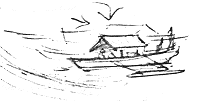
On the way from Labuan to Morotai we stayed overnight at Zamboanga, third largest town in the Phillipines.  It is situated on the extreme southern tip of the most southern of the islands.  A good deal of it was knocked about but it was still the most interesting place we have struck.  Cliff Eager, Capt. Flett (an official war artist from Melbourne) and I walked into the town from the airstrip and gave it a good smelling over.  What a stinking, dirty, filthy lot most of the Phillipinos are!  The women dress in ill fitting and bedraggled European clothes and they are fat and slothenly.  Not a patch on the Malays or the Chinese for carriage and looks.  They seem to be a pretty degenerate lot – in Zamboanga at least.  The waterfront looks much as it does in photos of other eastern ports.  Hundreds of watercraft with  little roofs built over the vessel and with outriggers on both sides like

Image19

A concrete promenade with steps into the water is absolutely littered with refuse the stench of which is abominable.  Fruit skins, dead fish, sweat, every ruddy thing.  The native village on stilts in mid stream would make you sick!

The cost of living is terrific!  Only 2 Pesos to the American dollar – which makes one Peso worth 3/1 Australian.  The three of us had a cup of tea and one ordinary chicken sandwich in the cleanest looking shop in town.  This set us back only 5 Pesos 40 cents = 16/-!

Anyway, we dawdled around a bit more & decided to have tea at the same place.  We had a really good chinese feed for the modest figure of 11 Pesos 50 cents.  Thank heavens we didn’t stay there long.  Arrived in Morotai on Tuesday 12 noon.  I don’t feel much like writing.  I’d rather be getting back to see you & tell you all about everything and to see how the little man is doing.  I wonder if he’ll remember me.  I suppose not.  Lots of love darling – please look after yourself.

Bill

P.S. I got your second letter at Labuan just before I left.  Have had none since.

W.E. Pidgeon (WEP) watches a performance of Jiu-Jitsu with Japan
JAPANESE PRISONERS OF WAR at an Australian compound on Morotai watch an exhibition of judo (a form of jiu-jitsu). With them (top right) is Daily Telegraph artist “WEP”. – Australian official photo, published, The Daily Telegraph, 1 Sep 1945.

[This would appear to have been Bill’s last letter home to Jess. His exact return date is as yet unknown but it is anticipated he did make it home in time for his and Jess’s 12th wedding anniversary on August 24th, 1945.]

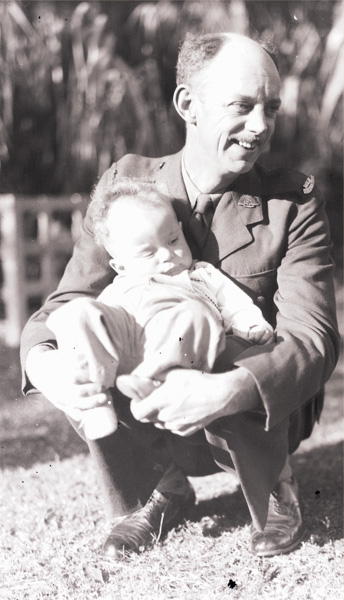
W.E. Pidgeon (WEP) with son Graham at home in Northwood about Ja
W.E. Pidgeon (WEP) with son Graham at home in Northwood, Sydney
WEP_JESS_018 Jess, Graham and Bill circa 1945
Jess, Graham and Bill Pidgeon (Wep) at home in Northwood

War Letters – Borneo: 16 Aug 1945, Morotai; Draft copy for Women’s Weekly story

The follwing copy, written whilst in Morotai was the basis for a story published in The Australian Women’s Weekly: 1945 ‘Soldiers in North talk and dream of home.’, The Australian Women’s Weekly (1933 – 1982), 8 September, p.17, http://nla.gov.au/nla.news-article47246573

Wep's War Correspondent badges and sketch book

Morotai, Thursday 16th August [1945]

It was pretty certain on Friday the 10th of August that the war was over. But the wild exuberant lead that flew around to celebrate the peace was just as vicious as that of war. Ironically, peace too, brought its casualties. The spontaneous rattle of machine guns and rifles was answered by the bopping of the Bofors and the slicing of the searchlight batons beating time across the sky. But the tension was gone and there was singing and drinking and yelpings of joy. And there was sentimentality galore. Three days it lasted. By Monday the boys had steamed right off and official peace was accorded no more than just a passing nod. In the night a few tracer shells moved in slow red perforations across the night and no one cared. It was more important and more depressing to contemplate the months yet to be served before demobilisation became for each a real returning to the ways of peace. Things were normal then on Monday. The hangovers were lifting and the cooks just cooked while batmen batted. In the evening at the pictures I attended, the troops stoically accepted the acrobatic antics of warrior Errol Flynn. The ceremonial tracers and searchlights moved on. The Australian Comforts Fund came good with a hamper for each and the thousands of plum-puddings are waiting on the spoon. Jube-jubes, peanuts, and peaches for the boys. A free bottle of beer has been promised.

But after all the shouting the life and background for most of the army personnel is still the same. The jungle is still green and thick and the Celebes Sea is just as ever.

Over there in Northwest Borneo the country is still smothered with gross fat trees in all shapes and sizes. You backyard fernery folk would still goggle at the orchids, creepers, staghorns, and palms – herringbone ferns and bracken like you have at home, but taller than a man!

Thanks to the zestful bombing of the RAAF and to the shelling by the navy, all the shopping centres of all the towns and villages have gone with the wind. One can only surmise what must have been the beauty of pre-bombardment Victoria Town on Labuan Island. The fragments of pale blue plastered walls, the heaps of bright red bricks and tiles, the remains of Chinese architectural devices, the broken retaining walls of the canal behind the shops, the gaunt and shattered trees, the only two surviving brick buildings, the isolated clock tower, an aloof and well-proportioned symbol of the town remain to testify to its one-time charm. What is left is just a ghost. The bricks and bones that were once its substance have been bulldozed off and used as filling on the airstrip. Victoria Town is buried there.

It is a tedious four and a half hours journey by landing craft to Brunei, your doldrums unrelieved by the sight of anything of interest and intensified by the down pouring blast of the Borneo sun. Heaven help Venice if Brunei is, as some allege, “The Venice of the East”. Only a real estate agent could have thought that one up for such a squalid grey collection of native houses. They squat weakly on their legs over the evil-smelling mudflats of the stream. Certainly there is a touch of carnival in the comings and goings of the children in their praus, and in their singing, – high pitched notes that float smoothly on the river and the ooze. Tatter clothed natives pick and scratch in the rubble of the town.

Surprisingly the road to Tutong bursts into twin concrete strips like tracks into a suburban villa garage. The interminable bowing and saluting of the natives is a hangover from the rigourous Japanese domination. Every thatched hut has more than its quota of sparkling little nippers, mostly nude, who wave and salute like their elders. From the more knowing you get thumbs-up and victory signs.

The road loses itself on the beach and the beach becomes the road. The China Sea swishes on the beach and the breeze is cool. A continuous line of casuarinas encroaches on the sand and reminds the boys of home.

Far ahead the smoke of the burning oil wells of Seria throws up the dull blue shape of an apparent mountain range. Closer, the sky darkens and the wind is quiet in the ominous gloom cast by the rolling smoke that dims the sun to the ignominy of a mothball hanging in the murk. Great jets of flame roar like Gargantuan blowlamps, the earth rumbles, and the trees are smothered in soot and oil. It is a black and white photo with fires in the middle. Australian army engineers are putting them out.

Personnel of the 20th Bgde. live a smooth existence at Kuala Belait. Here they share such terrors of war as laid-on gas and water, cricket and swimming on the beach, and offices, reading rooms, and a ping-pong in the homes and clubs of the pre-war oil executives. “A great war”, they used to say, but they’re pleased to see it over. The entrance to the erstwhile market is nice and handily flanked on one side by the local jail and on the other by a notice board bearing dire Army proclamations in English, Chinese and Malay. A few blackened beams and the fire-blued skeletons of a thousand bikes form this cemetery of a street. Malays and Chinese still shuffle up and down the road, or sit passively in the shade to watch the kids play and screech just as they do in Redfern or Fitzroy. In front of three tired shops – the only ones left – tiny silver fish are drying on sheets of corrugated iron in the sun.

From a house comes the brittle tinkling of an untuned piano; someone is playing with one or two fingers a Chinese song which strangely lapses into a few bars of “Way Down upon the Swanee River”. If you get to know little Peggy Ho and you ask her nicely, she will sing in her sweet little voice “I’ll always call you Sweetheart”. She is only 12 and very tiny and in some way her performance is very touching and it makes you think of all the children and of home. Peggy learnt that song and a few others while the Japs were here and when to speak English at all was indeed dangerous. Before they came she knew only her ABC and her family and friends have secretly taught her so much. What could the Japanese do with people like that?

You go to Limbang by barge through twisting aisles of water palms and mangroves. The silence is broken only by the roar of the engines and the monotony of the scene is varied by the appearance of an occasional prau which slides past and is left dancing on the wash behind. The paddlers in their conical straw hats disappear around the bend.

Limbang is the country of the Dyak. He is a real native of Borneo! You are conscious of a shock – your preconceived ideas of him were sadly naïve. Are these exquisitely feminine looking beings the bogeymen of your childhood days? It is unbelievable. Beautifully proportioned, sleek as a pear, you must admire their bodies. Here are Grecian marbles modelled in miniature and clothed in flesh of the lightest coffee hue and tattooed with the green scrolls and mystic patterns on the throat & shoulders. Their long hair is tied up with a strip of coloured cloth and the sun shines bluish on the fringe across the forehead and on the loopings of the spiral pointed bun. Throat bands, armlets, silver bangles just above the calf, and a loin cloth cunningly tied complete the peaceful ornamentation. But their swords and spears are razor sharp, their blowpipes silent and deadly. Many a Jap straggler’s head has been lopped and smoked for their mantelpieces at home. A useful ally to have even if he is not, patrolmen will say, so blooming hot in an open fight.

From Labuan another four and a half hours of sitting on a barge like a redhot waffle iron will bring you to the area occupied by the 24th Bgde. This is the land of the celebrated jeep train. Steam engines used to haul the train from Weston to Jesselton but on their hurried way out the Nips did their best to incapacitate the locomotives and the RAAF filled the boilers full of holes. So the engineers put iron tyres on the jeeps and shoved them on the rails and hooked the trucks behind.

The light narrow gauge line leads the train through disused paddy fields, through long and delightful tunnels of tropical green. The rubber trees meet in an arch overhead and the undergrowth, unhindered for the last three and a half years, forms walls of fern and palm and lasiandra whose purple flowers brush your body as you pass. For long stretches the track is carpeted with grass and only the polished rails indicate the way ahead. An intimate green pathway over which trucks clunkety-clunk and we lack only the great asthmatic puffing of the real thing. Natives stand aside for us to pass at intermittent clusters of houses, or at a real station, we disgorge bodies and rations to the babble of the Chinese and Malays.

At Beaufort the army put on a carnival day for the children of the district. The natives swarmed in by train, in boxcars and flat-tops. They squatted and huddled together tight as a bunch of grapes and quietly soaked in the drenching rain. In the boxcars native orchestras “gave out” and were “in the groove” in several different tunes. The penetrating boom of the gongs and the light melodic harmony of the gamelins (a xylophonic saucepan affair) burrowed through the dusk and rain. It was a great day for Beaufort. The children laughed at the soldiers and the soldiers laughed at the natives. Pillow fights and obstacle races, lolly-water and fireworks, Malay dances and Chinese singing, jeep rides, speeches and fraternisation, Miss Beaufort competition and ceremonial tea drinking – it was all there. British administrators considered with gloomy foreboding the Australian “spoiling of the native”. At 11.30 p.m. they straggled home – grandpas, grandmas, dads, and mums with sleeping kids swung in “cuddle seats” made of gaily coloured scarves.

There is nothing more to say. In all the talk of Borneo it is only home, and how quick the five-year men can get there that matters. This is THE topic, whether with the boys on patrol, or with the wallahs at the base. Points scores and probabilities of departure times are studied and discussed like form guides, And it shouldn’t be long before many homes have their men back for good.

(Alternate paragraph on different paper)

Of all the talk in Borneo it was, and still is, only home and how quickly the men can get there that matters. This is THE topic, with both the boys up front and the wallahs at the base.

Naturally five-year men will be first and points scores and probabilities of departure times are studied and discussed like form guides. News of the POWs of the Eight Div. Is expected hourly and the long awaited reunion with them is imminent.

Yes. Very soon many homes will have their men return for good.

error: Content is protected !!