War Letters – Borneo: 4-6 Aug 1945, Beaufort; An overnight visit to Papar

W. E. Pidgeon
c/o Public Relations
1 Aust Corps
Sat. 4 August [1945]
(Beaufort)


Darling,

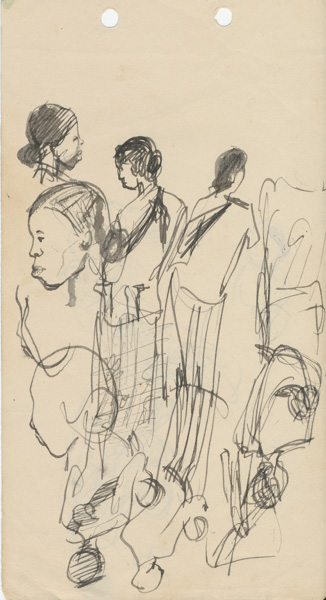
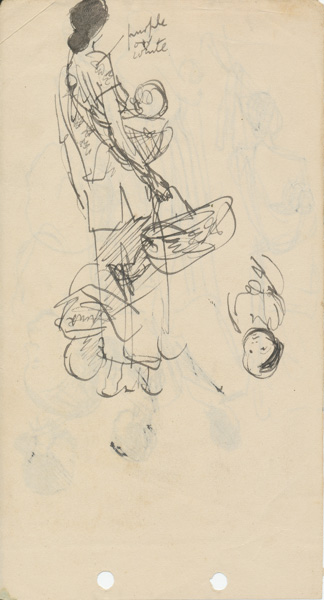
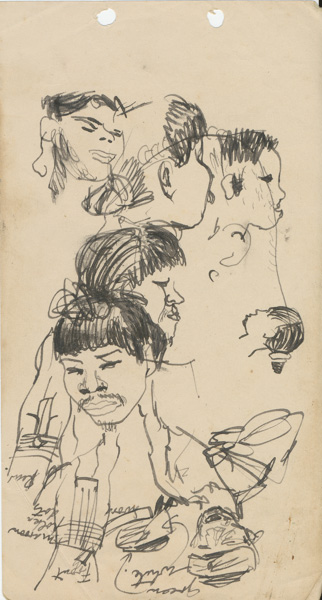
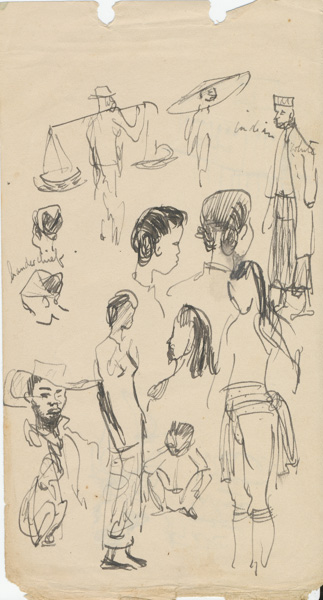
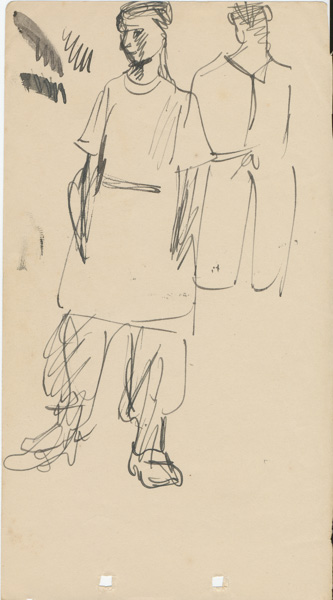
I have just received your letter dated the first night you spent at Bright .  It was a great treat to hear all about the doings of yourself & Bub.  I mean, young Master Graham.  You tell that silly young galoot to stay putting on weight till dadda comes home – and for you,  my girl forget not the dangers of gross eating at your  mother’s place because I would like to see you wearing pyjamas and the top that the Chinese affect in these parts.  Many of the women are smooth and pleasant in the features and they do their hair into beautiful slick plaits and buns.  Their clothes are always immaculately laundered and are cut to a close fitting finish.  The whole ensemble of colour, sleekness and daintiness of figure gives to them an almost doll like quality and frugility.

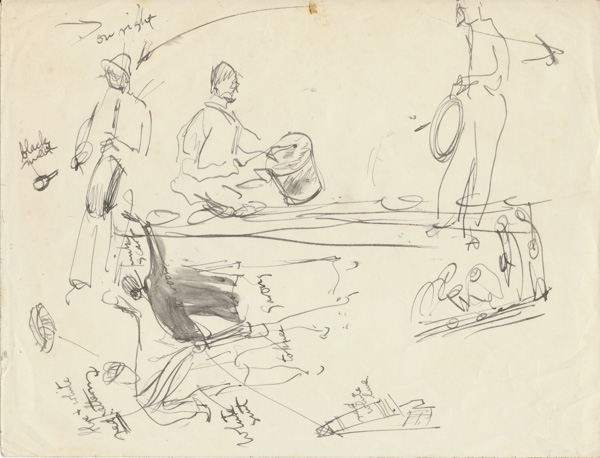
I have been trying to get one of those straw hats like

Image15but am meeting with no success as they seem to be made only for personal use and in any case I am stuck for means of transport to where I might pick one up.  There is actually nothing about – one has to realise that 3 weeks or so ago this area was still in Japanese hands and that the RAAF have blown all the shopping areas to bits in all the places I have been to.  Naturally all the saleable commodities went with the wind as well.

Thanks to your old man’s snooping habits and mechanical genius he has the pleasure to be able to write this letter in solitary silence.

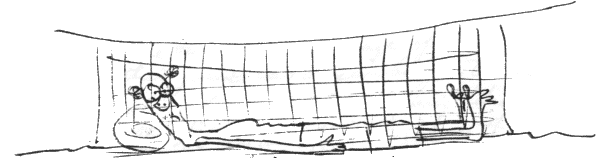
This morning I found under the house a crate full of old and rusted Japanese lamps – with a great deal of fossicking I managed to find a couple of poor things, the wicks of which I could just get to move – mostly downward.  Only one is functioning at the moment and is giving out every bit of 2 candle power.  It is a queer doover shaped so

Image16you put the kerosene if you can get any in here.

The whole caboosal measures only 8″ x 6 ” and is extremely temperamental,  Two of them have already given up the ghost – the wicks disappearing in the depths of the oil.  Because of  the grievous shortage of kerosene I cannot call on any of the reserves I have planted by my side.  Any smudges or runnings of oils you may discern on this page are to be accounted for by the leakings in the roof.  It has been raining for 5 minutes and already one side of this table is sporting a pool of water which is poppily dripping from the broken shingles above.  One earnest blob has just fractured the hot lamp glass.

I’m afraid this is the finish of this letter tonight.  The tide is sweeping over the table at an alarming rate.  To bed, my dear, to bed – and safety.  Goodnight.  It’s coming down in bloody sheets.

Monday 6th August. 5pm.

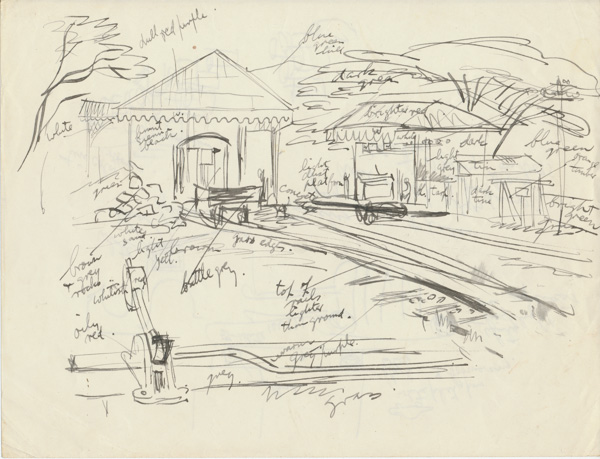
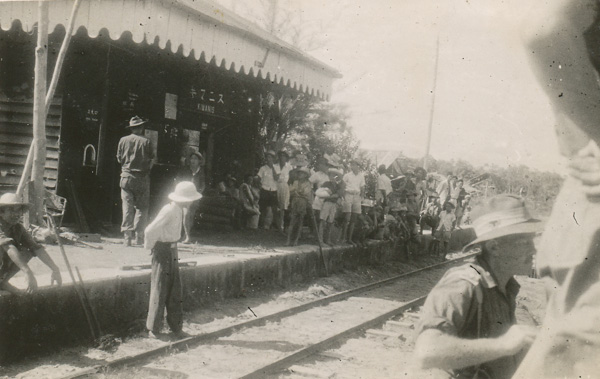
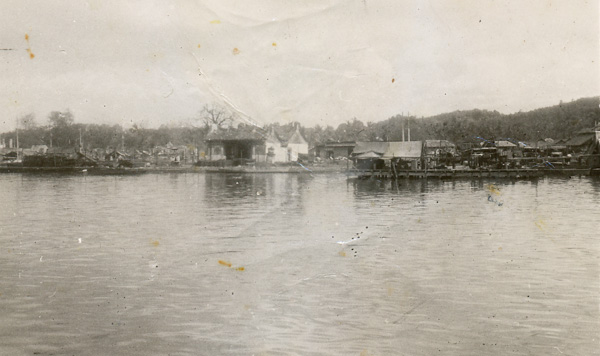
Am at a place by the name of Papar which has the pleasure of a complete blackout at night.  Hence this hurried scrawl as I have to bathe and eat before I settle down for a dreary night.  I’m damned if I can sleep after 3.30 am I get to bed too early.  It is not light till 7.00 so I pass some pretty dull hours – their only enlivenment being thoughts of you and Graham.  It is raining again – everyday for that matter.  This place is on the perimeter and is about 30 miles by jeep train from Beaufort.  I came up this morning – took about 4 hours.  It is a much more pleasant place than Beaufort.  Coming into this area we travelled through some nice open country,  paddy fields on either side were dotted with thatched huts, natives using water buffalo to pull their ploughs, and in the distance the foothills & blue mountains cut across by low lying clouds.  The Japs are over there.  Flanking the railway line the swampy channels are covered with water hyacinths like we have at home and all carry a profusion of purple blooms.  The whole landscape is a harmony of white, blue, green & lilac.  Very good.  Climate is fairly cool but I’m sure it is more an illusion than anything else – as I sweat just as much.

Have just had tea and things are lightening up a bit – I find that the approaching darkness was due more to the storm than to the time of the day.  The thunder was a terrific accompanyment to the deluge which has just finished and has left the whole of the vivid greens in sight floating on pools of yellow muddy water.  Under this light the leaves and grass are an intense green, the green that car headlights sometimes show up.  This is a hell of a fertile country.

I will be returning to Beaufort tomorrow & Wednesday to Labuan from where I hope to get to Balik Papan within a few days.  I shall probably spend a week there & then think of returning home which will, with transport holdups, take a week or longer.  I am not particularly sanguine about my chances of getting back by the 24th.  But will make every effort to do so.  Whacko the anniversary!  We’ll let the young man have his second champagne – that is if you haven’t scoffed it all yet.  I will certainly be back for your birthday.

Lots of love to you, Graham & Mum from the travel bound

Willie

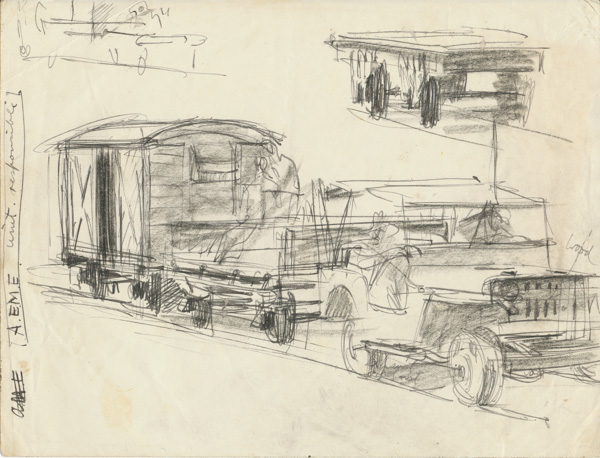
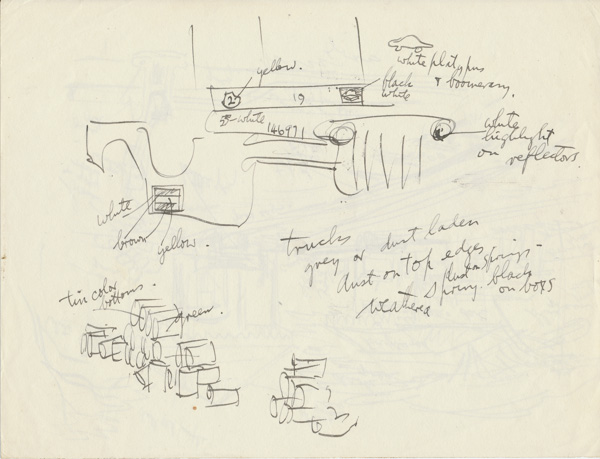
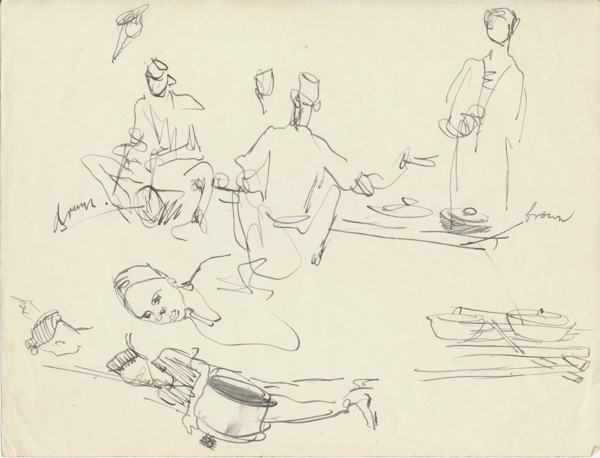
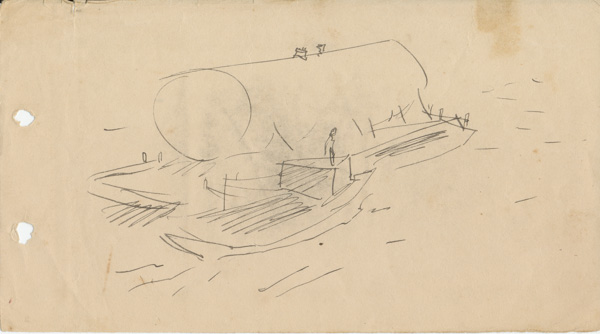
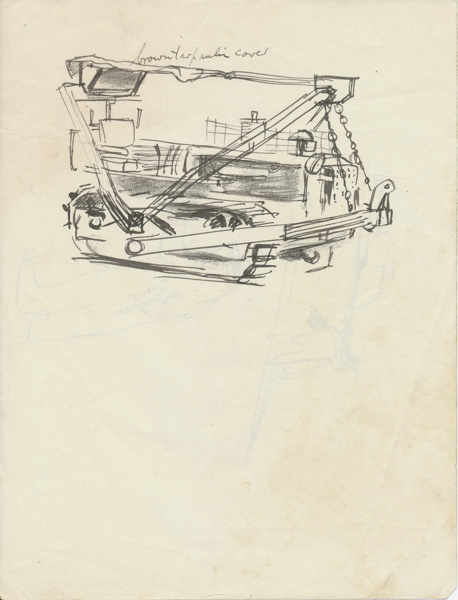
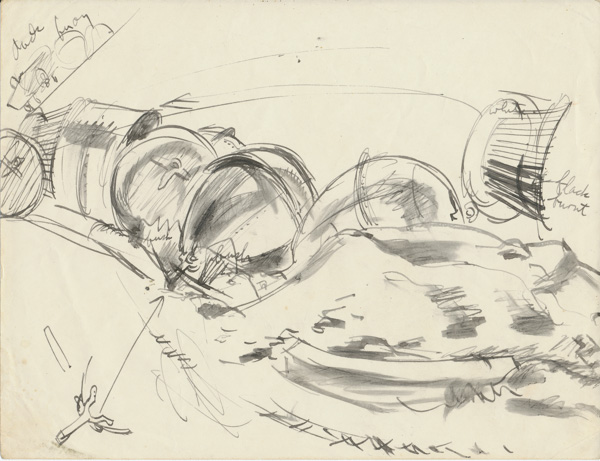
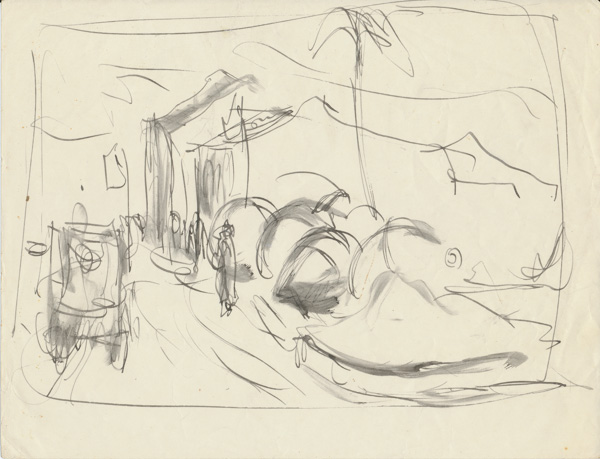
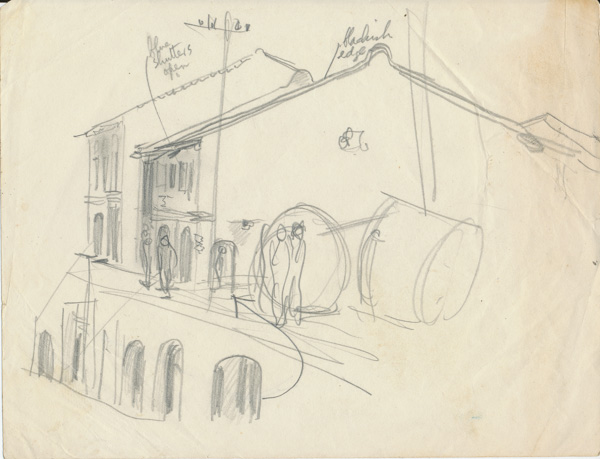
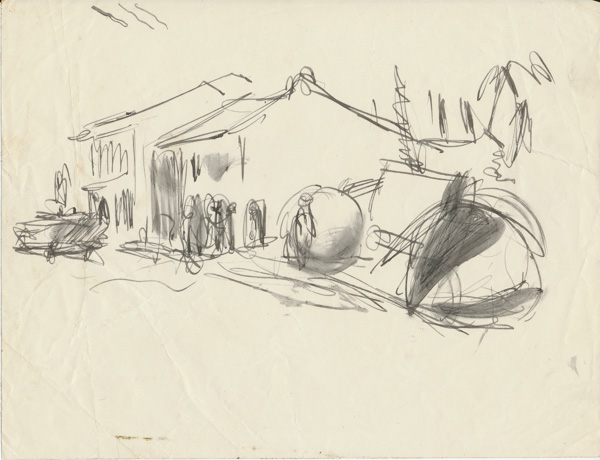
[Jeep train study, Borneo]
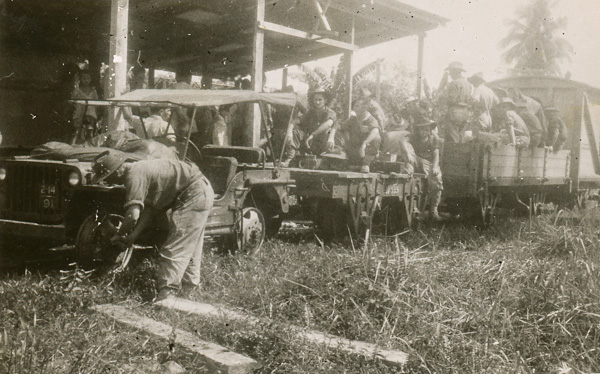
Jeep train at Beaufort, Borneo
Jeep Train. Jeeps were modified to haul train wagons and flatbed
Jeep Train – The retreating Japanese had blown up all the steam locomotives so the Army modified Jeeps to haul the wagons and flatbeds
24 x 18 cm
Jeep train study
Train station at Papar
Train station at Beaufort
Train station at Papar
Train station at Beaufort
Train station at Beaufort
Train station at Papar
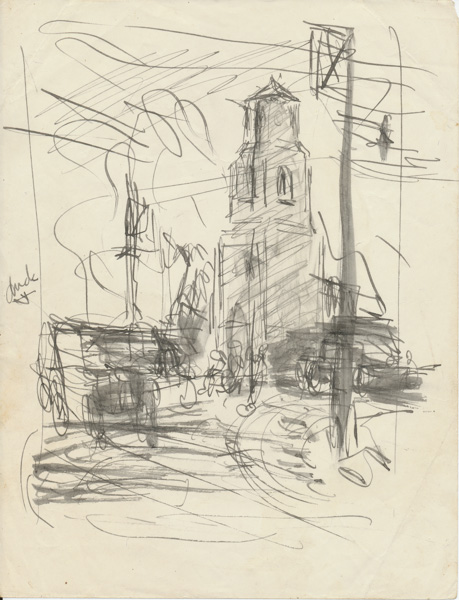
Church of the Holy Rosary, Papar
Possibly at Jesselton on the Jesselton to Papar line
The Jeep train runs through rubber tree plantations which at times form an arch overhead

21 x 11 cm

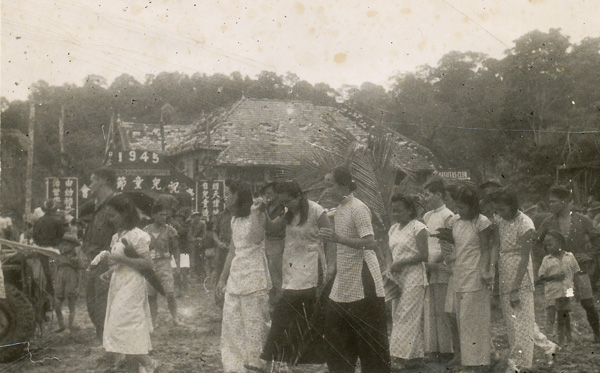
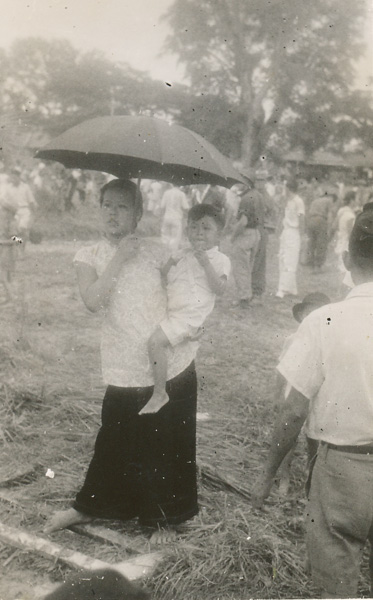
[Note: Wep’s return to Beaufort coincided with the Childrens’ Carnival held on August 8, 1945; organised by members of the 2/43rd Australian Infantry Battalion.  Wep described the carnival in a story he wrote for the Women’s Weekly, (1945 ‘Soldiers in North talk and dream of home.’, The Australian Women’s Weekly (1933 – 1982), 8 September, p. 17, viewed 16 May, 2013, http://nla.gov.au/nla.news-article47246573)

“At Beaufort the army put on a carnival day for the children of the district. The natives swarmed in by train, in boxcars and flat-tops. They squatted and huddled together tight as a bunch of grapes and quietly soaked in the drenching rain. In the boxcars native orchestras “gave out” and were “in the groove” in several different tunes. The penetrating boom of the gongs and the light melodic harmony of the gamelins (a xylophonic saucepan affair) burrowed through the dusk and rain. It was a great day for Beaufort. The children laughed at the soldiers and the soldiers laughed at the natives. Pillow fights and obstacle races, lolly-water and fireworks, Malay dances and Chinese singing, jeep rides, speeches and fraternisation, Miss Beaufort competition and ceremonial tea drinking – it was all there. British administrators considered with gloomy foreboding the Australian “spoiling of the native”. At 11.30 p.m. they straggled home – grandpas, grandmas, dads, and mums with sleeping kids swung in “cuddle seats” made of gaily coloured scarves.”]

Scenes around Beaufort at the Childrens' Carnival held on August 8, 1945
Scenes around Beaufort at the Children’s Carnival held on August 8, 1945
Scenes around Beaufort at the Children's Carnival held on August 8, 1945
Scenes around Beaufort at the Children’s Carnival held on August 8, 1945
Scenes around Beaufort at the Children's Carnival held on August 8, 1945
Scenes around Beaufort at the Children’s Carnival held on August 8, 1945
Scenes around Beaufort at the Children's Carnival held on August 8, 1945
Scenes around Beaufort at the Children’s Carnival held on August 8, 1945
Scenes around Beaufort at the Children's Carnival held on August 8, 1945
Scenes around Beaufort at the Children’s Carnival held on August 8, 1945
A gamelin being played
Scenes around Beaufort at the Childrens' Carnival on August 8, 1
A gamelin being played at the Beaufort Children’s Carnival
Scenes around Beaufort at the Children's Carnival on August 8, 1945
Scenes around Beaufort at the Children’s Carnival on August 8, 1945
Scenes around Beaufort at the Children's Carnival on August 8, 1945
Scenes around Beaufort at the Children’s Carnival on August 8, 1945
Scenes around Beaufort at the Children's Carnival on August 8, 1945
Scenes around Beaufort at the Children’s Carnival on August 8, 1945

War Letters – Borneo: 3 Aug 1945, Weston; Jeep train to Beaufort

W. E. Pidgeon
c/o Public Relations
1 Aust Corps
3 Aug Friday [1945]


Dear Jesso,

Am in a stinking little grey bleached place called Weston – arrived here after 4 1/2 hours in another barge and the trip was just as hot and dull as that from Brunei.  Soft lotions of frankiness and myrth would be more beneficial to my skin than these down pouring blasts of heat.  Yesterday in Labuan we took a day off and lazed in the sun and surf and under the coconut palms while the China Sea sent sweet cooling winds to dry away the sweats.  It seemed so cool, although it was 87 degrees (symbol) in the shade of the tents that Cliff and I just sopped up sun in a big way.  Half an hour after retiring to the tent I took on a particularly choice hue of Alizarin Crimson which makes a very striking colour combination in juxtaposition to my green shirt, and makes for a very tender shoulder, not the sort of shoulder on which to sling the many and weighty packs I am lugging around.  We got up at 5.30 this morning, and waited till 8.15 for the barge to pull out.  Of course this barge must miss contact with the 12.00 jeep train that runs from here to Beaufort.  So we are waiting again.  Just a mere 2 hours for the next.  2 hours as lively as one could wish for – just as if you were on one of those unattended railway stations out west.  This jeep train is, I believe, as I haven’t yet seen it, a collection of motley old carriages and trucks pulled along a light narrow gauged line by a jeep which has had its ordinary wheels replaced by a railway type.  Weston is a hive of activity – three natives just staggered past.
Beaufort 8.30 pm.  So far this is a bastard of a place.  After a really stinking day we have been unloaded into an old evacuated house to which clings a rare odour of old Chinese or Japs.  (At least that is what I presume that is what it is).  To cap matters there’s no even a bleeding light in the whole flaming joint.  Consequently I’m writing this in a Salvation Army social tent housing at the moment 25 lively tea drinkers and one cud-chewer which is me.  The tables groan under the weight of many cuppas (or rather tinnas), the conversation is subdued but constant – the radio more than holds its own against all other noise.  Four other diligent letter writers compete with my silence.  It’s all very much like the lounge of an hotel only the liquor is tea (or whatever it may be – I am completely baffled by the taste) and the only occupants naturally are men.  It is quietly social.  And is the only place wherein I can find light enough to write this letter.  Incidentally I am the only baldy in the place, and for that matter one of the few I meet in the whole army under the rank of Colonel or Brigadier.  Nevertheless the fruitful climate of Borneo has brought forth on any arid head a fine crop of 4 or 5 brand new hairs.  These grow straight and bravely upright down the centre of  the field.  My continuity of thought is breaking down under the strain of trying to hear what everyone is saying.  The tea is evidentially encouraging them to compete with the volume of the wireless – the general level of noise has risen by 100 percent.  I think I’ll have another go at the brew that is coming out now – it seems to have some stimulating virtues from what I can here.  It’s hot and wet – it tastes sweet and has a dark cloudy look  – but I still don’t know what it is.

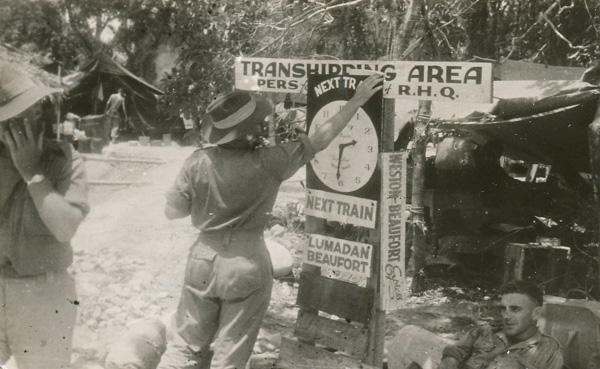
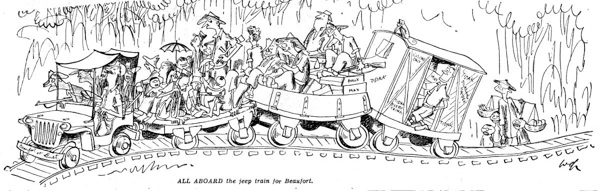
The jeep train was worth the trip even if there is little in it as a serious drawing job.  Perhaps a comic sketch.  The steam engines which used to draw the trucks and carriages have broken down and are under repair.  The ubiquitous jeep takes their place and draws up to 3 cars behind them. The one we came up on consisted of first a flat top truck, next an ordinary one, and lastly a box car for the rations.  Chinese and Malays occupied the first, and soldiers the second.

jeep train

It is an interesting trip.  The narrow gauge leads the train by disused paddy fields through long and delightful tunnels of tropical green.  The rubber trees meet in an arch overhead and the undergrowth that has been growing in the plantations for the last 3 1/2 years forms walls of fern and palm and flowering lasiandra which brush the body as you pass.  As a rule the track itself is carpeted in grass and only the polished lines indicate the way ahead.  An intimate green pathway over which our trucks clunkety – clunk with all the noises save that of the great asthmatic huffing of a real train.  Natives stand aside for us to pass and look just like the line people back home – but you miss the cry of “Paper! Paper!” At occasional clusters of houses in the plantations we pull up at a station and unload to the screechings and joviality’s of the Chinese.  I shall continue the train trip further onto Papar in a few days time.

Am looking forward to getting a letter in a few days.  I hope that you are both all right – also Mum.  How’s the pool and fitties?  Have you been giving the Coyes a rest.  I am feeling very holy and very well – don’t care if I don’t have a drink at all and certainly have no desire to collect myself any more hangovers.

Lots of love dear – tell little Graham Poppa thinks often of him always when I see the kids up here and there are thousands of them.

Love

Bill

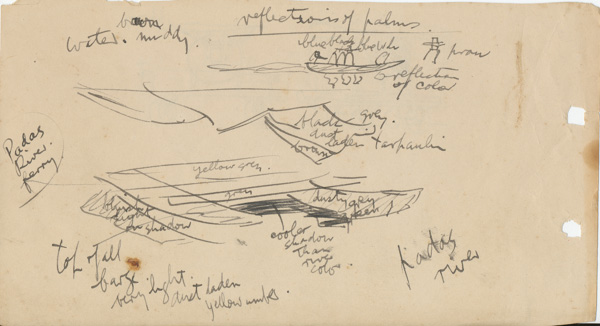
Possibly along the Padas River near Weston, Borneo
Padas River Ferry
Padas River Ferry
Possibly along the Padas River near Weston, Borneo
Padas River Ferry
Padas River Ferry
Padas River Ferry
Padas River Ferry
Padas River Ferry
Padas River Ferry
Padas River Ferry
Padas River Ferry
Padas River Ferry
Padas River Ferry
Padas River Ferry
Padas River Ferry
Rail carriages used by the Jeep Train
Along the Jeep Train line between Weston and Papar
AWW 1945-09-08 p17 Jeep Train - Copy
All aboard the jeep train for Beaufort, The Australian Women’s Weekly, 8 Sep 1945, p17

War Letters – Borneo: 28 Jul – 2 Aug 1945, Limbang & Labuan; Visit to a Dyak village

W. E. Pidgeon
C/o Public Relations
1 Aust Corps
July 28 Sat. [1945]


Dear Jess,

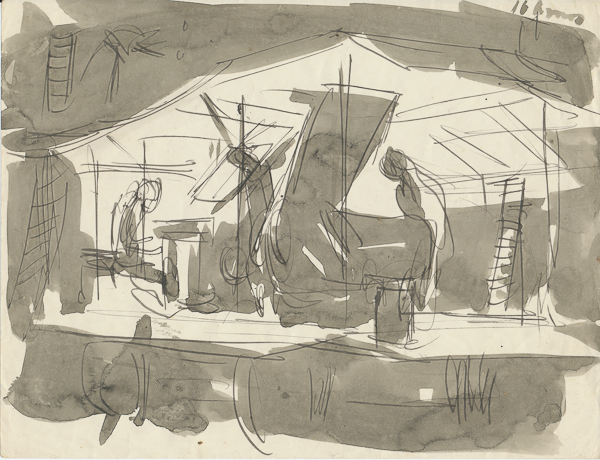
Will probably be moving off tomorrow for the Jesseltown area which I should manage to cover in a week.  I have 7 or 8 possible subjects up my sleeve now, so what with that trip & a week or ten days at Balik Papan (Bally P ‘parn’ to you, mug).  I should have enough stuff to satisfy “The Weekly”.  I see no good purpose served by just hanging around sight seeing.  What really takes up the time here is transport which is slow & varied.  I intend to visit a Dyak (the indigenous native) village on the way back to Labuan.  I should be home in 4 or 5 weeks.  Am having a loaf this afternoon and shall perhaps take in a swim later.  Spent an extremely hot morning trying to paint a blown up workshop which now houses the field bakery.  Had the usual horde of sightseers clustered around me.  They did not worry me as much as the difficulties encountered in the attempt to paint under the tropical sun.  Sweated like a pig all the morning and am now in a semi coma.  This climate is enervating enough – turns me into a sort of lean Tommy Moon.

Image13

I’d do a shot of spine bashing only that I would be awake half the night!

Tuesday 6 pm.
[31 Jul 1945]

Have just finished a tea of sorts (we have it at 5.30, which is really about 4 o’clock) and am sitting in solitary state in my own tent watching a sudden tropical downpour, complete with thunders & lightenings.  I sit and contemplate the muddy foreground.  The uncountable puddles making it nearly as wet as the Limbang River which flows past just a hundred yards away.  I am not back at Labuan yet although I intent to return there tomorrow.  On the advice of those who know I sidetracked myself to the village of Limbang – a 1 1/2 hours barge run from Brunei.  It was worth the visit alright.  Here one sees the natives of Borneo, the head hunting Dyak, in their real state.

AWW 1945 Oct-20
The Australian Women’s Weekly, 20 Oct 1945

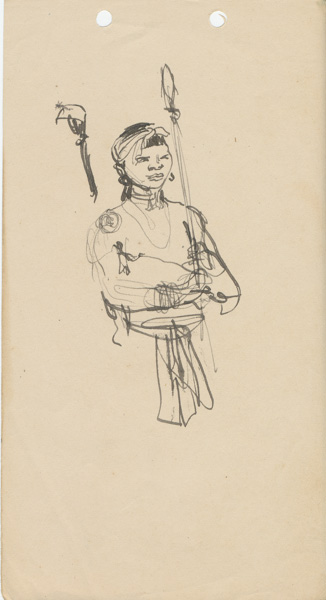
[Study, Dyak warrior, Limbang area, Sarawak I]
[Study, Dyak warrior, Limbang area, Sarawak I]
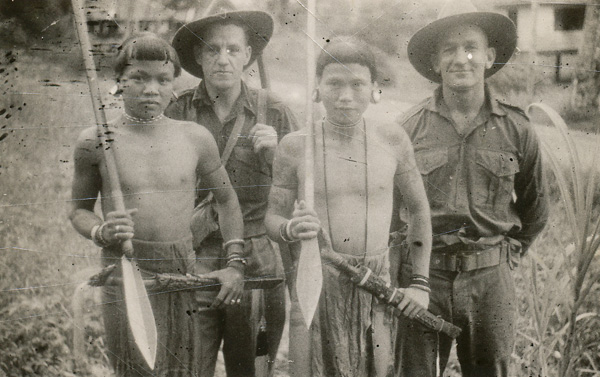
By God, they’re magnificent people.  It is hard to associate their grace & beauty with their bloodthirstiness.  The extraordinarily feminine features of the young men must be seen to be believed.  They are small but wonderfully proportioned – with their long hair, reaching down to the bottom of their shoulder blades, or done up in a pointed bun at the back.  They wear too a jet black fringe across the forehead and beaded throat bands.  Great big earrings, or rather decorative plugs in their ears.  Silver bangles run riot on their forearms, & above the calf of the leg (a wonderful leg too, me girl!).  Blue green tatooing’s on the throat & shoulders – and a colorful loin cloth sits comfortably alongside the sharpest of swords.  Two of the kids, one about 14, the other about 17 were bloody beautiful.  I shan’t try to draw them for you as I couldn’t do them justice.  I took some photos of them late in the evening – I hope they come out alright.  Chinese & Malays wander up and down the only street all day long.  Some good lookers too, by gum.  The army crimes anyone found indulging in hanky panky with the native population.  The women marry early & have a child every year.  For every couple there must be an average 4 or 5 kids, and this by the time the woman is 22.

Wed. 5 pm

[1 Aug 1945]
Taking a barge to Limbang
Barge at Limbang

Have been sitting reading in the bottom of this barge for Labuan.  Three dreary hours have just passed – the first 2 in a hazy somnolent stupour against my packs and dripping from every pore beneath the sweltering sun.  There is absolutely nothing to look at from the bulwarks above – just the same sea, lazily waving in the same patterns as it did twenty miles back.  In the distance the same casual pale blue line of hills.  We are due to land at Labuan in an hour and a half.  I look forward to the landing at it means getting out of this dreary hot box – and most important – there should be some mail from you darling, awaiting.

Labuan
Thursday
[2 Aug 1945]

Things ain’t just what they should be.  No mail and no transport out of here tomorrow – which means a day wasted in sitting on my rear and grinding my teeth with sheer impotency.

We are in a new camp, a pleasant enough spot under the palms & facing the beach, but miles from any blasted where I could do some work.  Alan Dawes, Smyth, and Adams, are on the way home.  Only Cliff remains.

The only thing to do is to try and get some of the clammy sweat out of my clothes.  I have been getting around too much to be able to get them washed.  Looks like a cold water lick for them this morning.

Mail goes out shortly so bulletin will be cut to short issue.  The boys tell me that the mail has been delayed so I will not go into hysterics yet.  Today 3 weeks since I left Sydney and no news from the home front.

All rather grim not knowing how you & Bub are getting along.

Lots of love

Bill


I wrote a poem of sorts while spine bashing at Kuala Belait.

They are my clothes hanging there
Limp in the Borneo sun
And threaded on a sagging rope.
I can accept the flat green leaves
Gently swaying as the hawk
Who sails above the swish of surf
I can accept the bare chested soldier
His stained fag hanging from his lips
While he ties his singlet on the line
With string
I can accept the drifting mountain cloud
Of rolling oil fire smoke
Which canopies the sea
I can accept the clanking of the pans
The cook without enthusiasm
Washes in the hot and chlorinated water
I can accept the butterfly
Who flutters wavy and but once
Past the tents vee shaped pane of light


Dyak warriors with unidentified War Correspondents at Limbang, B
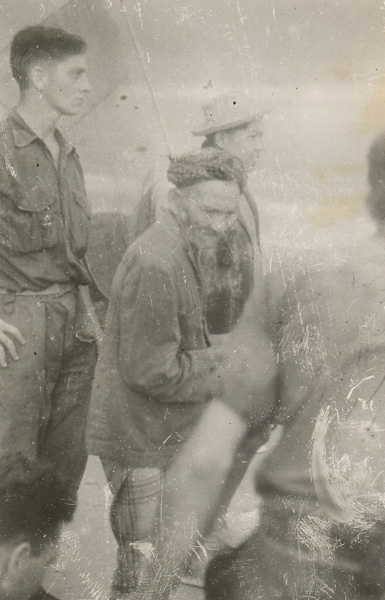
Dyak warriors with unidentified War Correspondents at Limbang, Borneo (possibly Cliff Eager on left)
Dyak warriors with an unidentified War Correspondent at Limbang,
Dyak warriors with an unidentified War Correspondent at Limbang, Borneo
Dyak warriors, Limbang, Borneo
Dyak natives, Limbang
Dyak warriors, Limbang, Borneo
Headhunters, Dyak warriors, Limbang, Borneo
Dyak warrior. The Dyaks are small in stature with almost feminin
Dyak warrior. The Dyaks are small in stature with almost feminine like features but reknowned for being deadly head-hunters
[Study, Dyak warrior, Limbang area, Sarawak II]
[Study, Dyak warrior, Limbang area, Sarawak II]

21 x 11 cm 21 x 11 cm 21 x 11 cm 24 x 18 cm 21 x 11 cm 21 x 11 cm24 x 18 cm 24 x 18 cm

War Letters – Borneo: 26 July 1945, Seria; Oil wells set on fire during Japanese evacuation

W. E. Pidgeon
c/o Public Relations
Thursday
26th July [1945]


Darling,

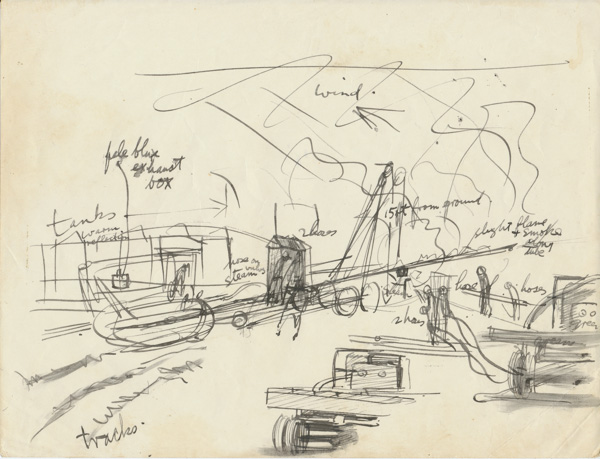
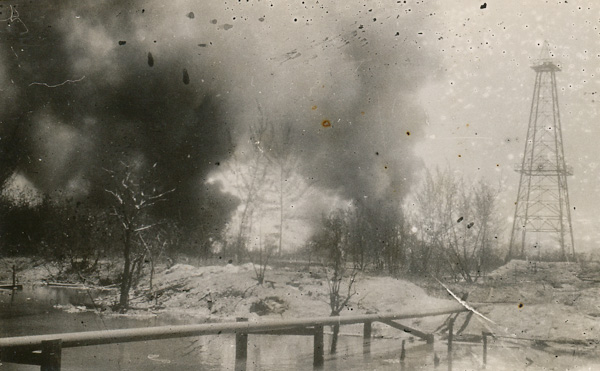
Am now on the North East coast of Borneo – still in Brunei protectorate and staying at a place called Seria where the Japs fired the oil wells before evacuation.  These fires are really a sight and  a half.  Hours before you arrive here you can see the smoke billowing into the sky, forming what looks like at  a causal glance a great distant range of hazy mountains.  Closer – the light of the sun is shut out by the smoke and an ominous pall of near darkness and portentous gloom hangs over the jungle.  The fires spout out with a roar like a thousand great blow lamps – the flames, or rather a huge swirling billow of fire twists its way into rolling volumes of thick and pungent smoke.  Am going down this morning to see the boys attempt to put one out.  This is a cert for a “Women’s Weekly” job if the whole business up here is not a cold duck before I finish.


Burning oil wells at Seria

I’m getting a bit worried about that as movement in this area is slow and at times difficult to obtain.  I have yet to go to the northern Brunei area and to Balik Papan.  I think I had best speed things up as much as possible.  The jungle here is much more opulent, sleeker, and fatter in the leaf, and in diversity and colour, than that of New Guinea.  Lasiandra grows like a weed all over the place.  It’s a pretty poor specimen – a meager squirt of the thing compared to the one that I used to grow.  How’s it doing since the great disaster?  Do you keep woman wet?

Haven’t had any letters from you yet, but as I have not expected any I guess no damage is done.  How are things going with you – I hope your mother is not pumping too much food into your petite frame.  Have not seen anything worthwhile bringing home.  I’m afraid the early troops have cleaned out everything of any style or value.

Went down to very well spoken chinese fellow’s home last night.  He was an expert employee of the oil company’s before the Japs came.  He has avoided working for the Nips since their arrival & in secret meetings with other chinese always spoke English & talked of the time they would return.  A little girl [Peggy Ho] about 6 or 7 years of age sang “I’ll always call you sweetheart” tunefully & in extremely good English.  I remember well the last time I heard that song in company.  Sofala days!  That little chinese kid couldn’t have been more than 4 when the Japs came!  One more drawing in this particular area & I think I’ll move off.

Lots of love to you & Graham & Mum.  I’m getting quite anxious to hear about him – his latest in wisecracks and his new found dietetic acquisitions.

Love,

Bill

Oil wells at Seria set alight by the Japanese before departing


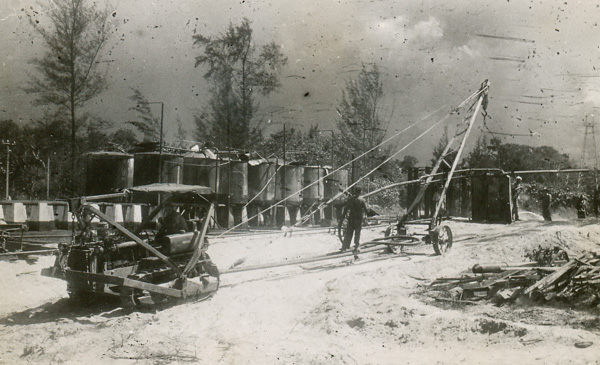
Australian engineers rig up a system to put out the oil fires at
Australian engineers rig up a system to put out the oil fires at Seria using a bulldozer rigged up with steam jet
Australian engineers rig up a system to put out the oil fires at
Australian engineers rig up a system to put out the oil fires at Seria using a bulldozer rigged up with steam jet
Australian engineers rig up a system to put out the oil fires at
Australian engineers rig up a system to put out the oil fires at Seria using a bulldozer rigged up with steam jet
Australian engineers rig up a system to put out the oil fires at
Australian engineers rig up a system to put out the oil fires at Seria using a bulldozer rigged up with steam jet
Australian engineers rig up a system to put out the oil fires at
Australian engineers rig up a system to put out the oil fires at Seria using a bulldozer rigged up with steam jet
Australian engineers rig up a system to put out the oil fires at
Australian engineers rig up a system to put out the oil fires at Seria using a bulldozer rigged up with steam jet


[Study for Burning oil wells at Seria II][Study for Burning oil wells at Seria III]Oil wells at Seria set alight by the Japanese before departing

21 x 11 cm 21 x 11 cm Oil wells at Seria set alight by the Japanese before departingBurning oil wells at Seria Oil wells at Seria set alight by the Japanese before departing

War Letters – Borneo: 24 July 1945, Brunei; Afternoon tea with the local villagers

Brunei
W.E. Pidgeon
C/o Public Relations
1 Aust Corps
Tuesday night
24 July


My dear Jess,

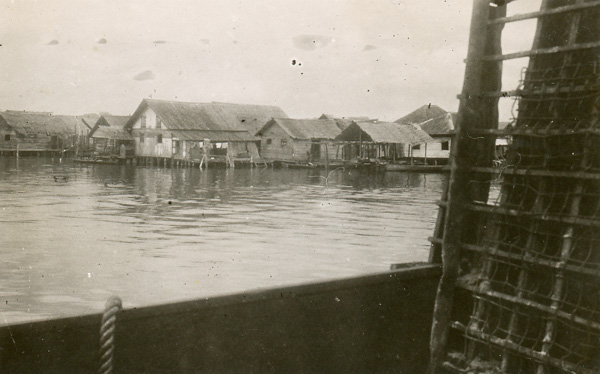
Am now on the mainland of Borneo and am camped at a spot by the river about 1/2 mile out of what is left of the village of Brunei.  I remember seeing an article on the leader page of  ‘The Herald’ in which this joint was described as the ‘Venice of the east’.  If Venice is anything like this God help it!  On the opposite side of the river there must be a couple of hundred native houses built over the water & supported by timbers much the same as the Papuan houses around Moresby.  There is an incessant coming & going of small boats – in & out from the houses, up and down the river – all over the bleeding place.  These houses look drearily squalid but the touch of tropic romance (sic) is supplied by a group of young kids paddling & singing a queer Malayan song which carries well across the water.  A slithering sound & a rasping of dry grass makes me jump & consider horrific images of pythons crushing Willie’s bones.  I escape this pulpy fate & sigh to see a lizard of the brightest cutest green imaginable and he eyes me obliquely & unmovingly.  After time I’ll take without a qualm the pinkest of elephants.  Maybe it was the gin I had last night.

I am escorted by an intrepid bodyguard from the Public Relations.  Apparently his job is to arrange transport for me and to fight off the Japs while I pursue the arts and further the successes of the “Women’s Weekly”.

It took us 4 1/2 hours to cross from Labuan.  After a large trip like this and a modest suggestion of a hangover I would willingly have given Borneo back to the wild men.

Had a bit of a snooze just before tea which is at 5.30 pm.  Incidentally the time the army is operating on is all haywire. I reckon it is about 1 1/2 hours ahead of what it should be.  This close to the equator one must expect normally sunrise about 6 am and sunset about 6 pm.  As it is sunup is nearer 7.30 am than anything and it gets dark at 8.  All this guff merely to tell you we have tea really at about 4 pm.

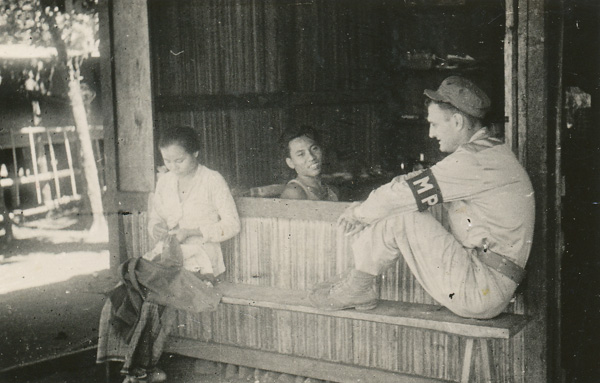
MP escort on a visit to the village at Brunei
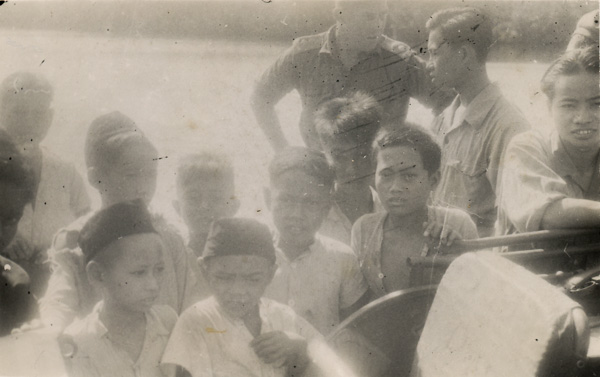
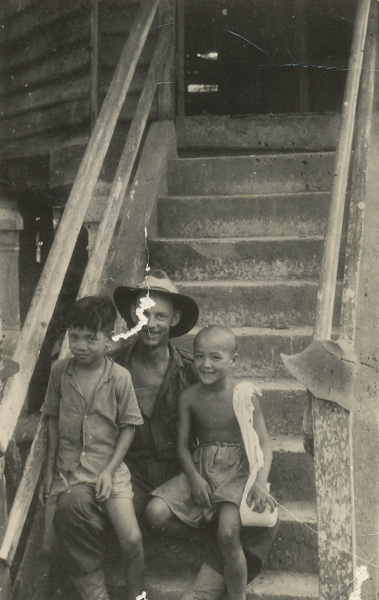
Wep with some local children, most likely in Brunei

Went over the village (the part that is sensibly built on land) after tea.  Accompanied by an army cop who talked and explained all the doings like a cook’s tour spruiker.  Had two cups of tea in a native home – this palace was underneath the house proper and in the room which I would say was approx. 15′ x 15′ lives 4 couples & an uncountable number of children.  These natives sure know how to reproduce the young.  The provost fellow knew a few words of Malay and all was giggles & tea swilling.  The higher social level here is maintained by the Chinese of whom some are really good lookers.  Many of them are pretty wealthy and live in large & airy homes bounded by gracious tress, bamboos, & banana plants.  Basically it is an interesting enough place although now sadly in need of repair & paint since the Japanese occupation.  The natives here are hard bargainers and see to it that the army boys pay plenty for what they want in the way of souvenirs.  Saw some magnificent sarongs some of the lads had paid 50 dollars for.  50 dollars to you mug, is about £7.10.0.  Quite a whack!

There’s a bug of some sort creeping round here making noises just like dear old Joe Palooka’s “Tch, Tch”.

Some of the little native kids are delightful.  I’d like to buy one for little Graham.  They carry on with the same antics.

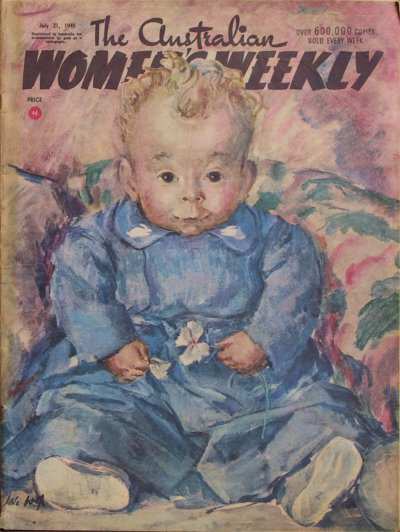
Little Wep; The Australian Women's Weekly, 21 Jul 1945
Little Wep; The Australian Women’s Weekly, 21 Jul 1945

Jimmy Smyth’s wife posted him the cover with our little man on it.  I look at it lovingly & it is now travelling Brunei State with me.  Is he looking after you all right?

I think I’ll push off to bed as I’m all wore out.  My salubrious couch consists of a hip hole in the earth – a ground sheet, a blanket, and a mosquito net.

Yours for better sleeping – loving Will.

Image11

8.30 am Wed.  The Brunei ground takes the fun for hardness.  It all added up to the longest night I think I’ve ever spent.  At last I have achieved a measure of benevolent dignity.  Graciously I acknowledge the salutes of the astute and discerning natives.  I walk along bowing & beaming like Queen Elizabeth.  The natives are nuts on gold teeth.  One soldier here told of a Malayan who had all his teeth covered & leaving a heart shaped window in the gold in the front – “Very pretty it was too”, says the boy.  I’ll bet?


Image12

Smart effect that

Lots of love darling to you & Graham

Bill

War Letters – Borneo: 22 July 1945, Labuan; Wet & cold, hot & dry, Victoria Town in ruins

W. E. Pidgeon
War Correspondent
c/o Public Relations
1 Aust Corps
Sunday July 24 1945 [22 Jul 1945]

Darling,

It is inconceivably wet and almost cold.  Everyone in the camp is on their spines, out of the wet, & either reading, or gazing gloomingly at the fog of rain that surrounds the tents.  It has been raining, & raining plenty for the last 2 1/2 hours.  It is said that all roads will be closed for the time being as the trucks & God-knows-what vehicles are simply churning them into a sea of mud.  Where, yesterday, I was choked & coated with the talc like dust is today a slippery & sloppy morass attended by the suckings and ploppings of boots stepping & out of the mess & the slithering hiss of tyres.  Damn me if it hasn’t got worse.  Our tent is flooded & the earthen floor lies beneath an inch of swirling water.  I got a spade & Eager is trying to dig himself out a bypass channel.  His stretcher is likely to float off any minute.  A few tents up Dawes & Smythe sit with their feet on their stretchers & peer helplessly at the 3 inches of water & slush beneath them.  Noel Adams in our tent takes it all rather philosophically – he can afford to – his bed is perched on the only dry piece of  ground in the whole bloody camp.

It is too dull, and uncomfortable to write any more at the moment.  The weather stinks and I am as wet as a WC from the hips down.  Borneo for rain!

[23 Jul 1945]

Monday.  Just prior to afternoon tea time.  Today is dry and hot.  The correspondents’ spines are still taking a terrible bashing.  As far as they are concerned this campaign is over and they are merely waiting to be taken home.

That fellow Newman, Ivan gave me the note to, is on the island but I have not been able to get sufficient means of transport to contact him.  I did meet one of the 2nd  Seventh who told me, Newman, was here.  The fellow that I met was Radcliffe and well remembers that dag “Joe” Gaskin.  Also came across Capt. George La Monte – I think you introduced him to me in the early days – he inquired kindly after you and if I recollect alright, the young man.  Lt. Arthur Horner, the tall fair artist johnny we had out to tea one night is attached to military history section just down the road.

Victoria, Labuan Island
Clock Tower at Victoria, Labuan

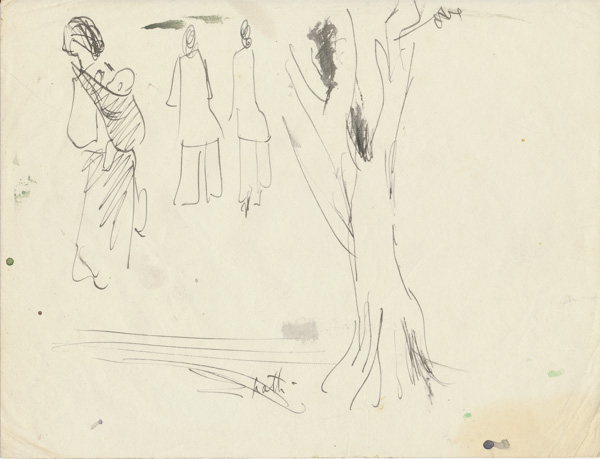
There’s nothing much to tell you about this island Labuan.  It is quite small and is more or less a base area with an air strip.  The Japs have been cleared out and there is no excitement apart from the tracking down of mosquitoes and myriads of other winged beasties.  I imagine that Victoria Town once the hub of social life, was a picturesque spot in pre war days.  Only a couple of brick homes and an old clock tower remain after the invasion bombardment and the demolition by the air force gangs.  The native population consists mostly of Chinese farmers.  Malayans and Indians, all quite small in stature.  The women are slim and on the whole not unattractive whilst occasionally a real beauty will appear for a passing moment.  Their build is slim and graceful, their bones delicate and well turned.  They dress mostly in a buttoned up to the neck tunic and three quarter length pants – their black hair is always well groomed in plaits and other what you – do – it like styles.  Usually the colours are white, pinks, bright blues, and black.  All beautifully laundered.  Sometimes you see them wearing a vivid puce headgear with a bright green upper garment and getting away with it.  The babies are either slung across their backs or carried in exactly the same ways as the cuddler seat manner.

Two bottles of beer and a bottle of gin ration is on today.

Am leaving in the morning for Brunei and down the coast to the oilfields where I should get more stuff than this place offers.  We shall see.  How’s my little fellow?  Has he missed me at all yet?  How are you?  Not unduly put out about my absence I hope.  Does he try to walk yet?  Behaving your ‘self?  How’s Mum? And a lot of other questions.  Lots of love dear and tell Graham I often think of what he may be up to.

Love

Bill

Have had some of my money changed into Straits Settlements money which is the legal currency up here.  Am sending you 1 dollar, about 2/11.

[Signature of censor at bottom of letter]

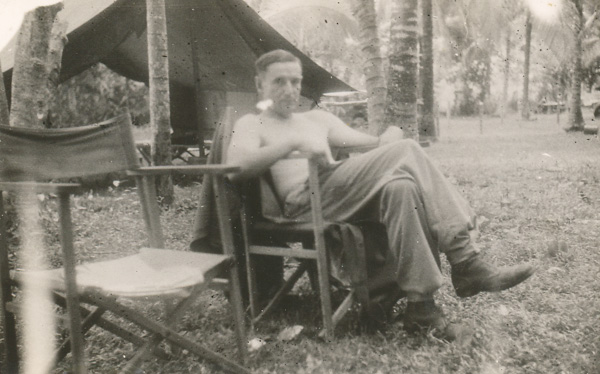
War Correspondent relaxing in camp at Labuan
War Correspondent Cliff Eager relaxing in camp at Labuan
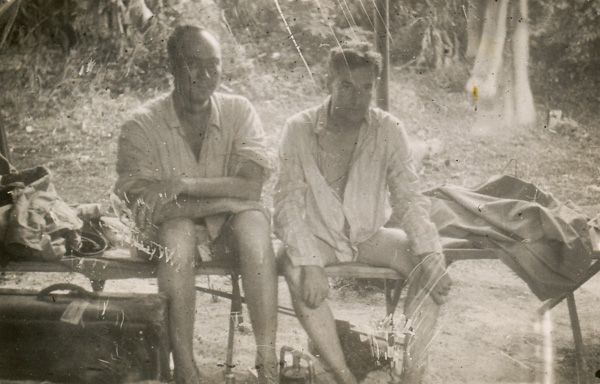
War Correspondents Jimmy Smyth (left) and Alan Dawes (right)
War Correspondent W.E. Pidgeon (WEP) relaxing in camp at Labuan
War Correspondents Jimmy Smyth on left, Cliff Eager on right in
Clock Tower of the local Town Hall, Victoria Town, Labuan Island


Victoria Town, Labuan Island
The Clock Tower in the distance and the only two buildings that remained in the former pretty town of Victoria Town, Labuan Island

24 x 18 cm 21 x 11 cm

War Letters – Borneo: 19 July 1945, Labuan; Morotai to Labuan via transport plane

Write to
W.E. Pidgeon
War Correspondent
Public Relations
1st Aust Corps
Thursday 10.15 am
[19 Jul 1945]


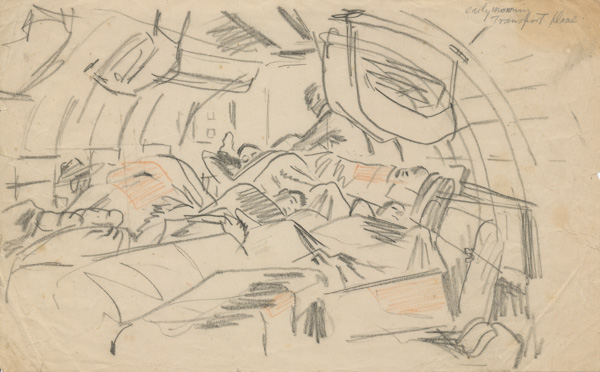
Am bored to tears  – am uncomfortably curled up (one cannot stay reclined) on a pile of mail bags – and am hanging about 8000 ft above an awful lot of ocean about half way between Morotai and Borneo.  We left the island at 7 am this morning and will not land at Brunei until somewhere near (censored) – It’s a helluva long way to fly.  All around is a vast hazy world of blue – the horizon is indistinguishable but you guess it is out where the blues change tone.  Above us long fingers of cloud point their stationery directions while below white balls like anti aircraft shell explosions spot the sea.  It is cold too and I sit dismally wrapped round in a blanket.  There are nine of us sprawled about half of them are either asleep or near it.  I’ve been pushed off to Brunei first because accommodation at Balik Papan is limited – There will be no need for you to worry about me copping anything as I understand that we have gained all objectives and are now content just to hold them.  Could go a cuppa or a feed right now with certain relish. I don’t know why they always like to get you up at 4.30 am to catch planes that never leave (censored) or 7.  It means a lousy nights sleep and a stupid wakening – no tea and no grub till we land.  Is that good or bad?

The cigarette position is grim.  They are rationed and the issue is 2 ozs tobacco and 30 or 40 cigs per week.  I did manage to come by one carton of yank fags but these boys have woken up to their exploitation by the Australians – so they now charge 5 guilders a carton i.e. 16/8 Australian.

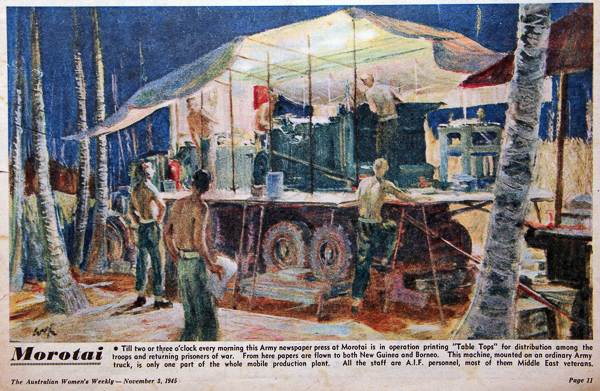
Morotai: mobile printing press for publishing the Army newspaper Table Tops

Mobile printing press at Morotai used for printing "Table Tops", Mobile printing press at Morotai used for printing "Table Tops",

Night before last I had been trying to do a bit of work about the mobile printing press the Army newspaper is produced on.  Unfortunately I decided on my return to the camp at 11 pm to call into the Public Relations tent & was inveighed into a game of poker – at 3.10 am I was only just awake & down 8 or 9  guilders when to my great good fortune an air raid alert was sounded & the lights had to go out.  The game was abandoned & I trotted off to a much needed bed.  The alert was a phony but it helped save poor Will from greater disasters.  Enough of this for the moment – I need to rest.

Arrived safely at Labuan.  Am with Cliff Eager, Alan Dawes, Jimmy Smyth & Noel Adams.  Mail is leaving now will write tonight.

Lots of love to you and bub.

Bill

Morotai, The Australian Women's Weekly, 3 Nov 1945, p11
Morotai, The Australian Women’s Weekly, 3 Nov 1945, p11

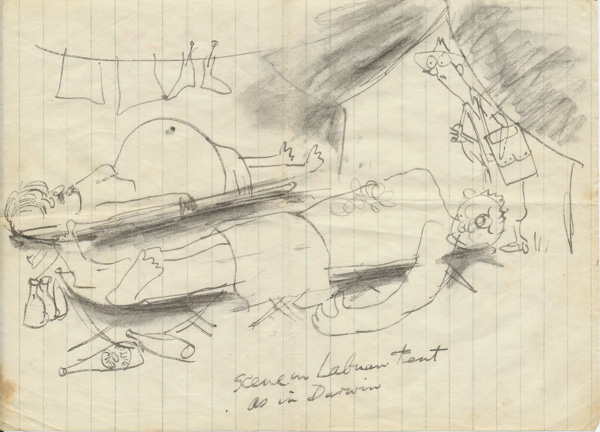
[Letter included caricatures of fellow correspondents Cliff Eager, Alan Dawes, Jimmy Smyth & Noel Adams.]

4 Borneo and Morotai Letters-214 Borneo and Morotai Letters-22 4 Borneo and Morotai Letters-23 4 Borneo and Morotai Letters-24

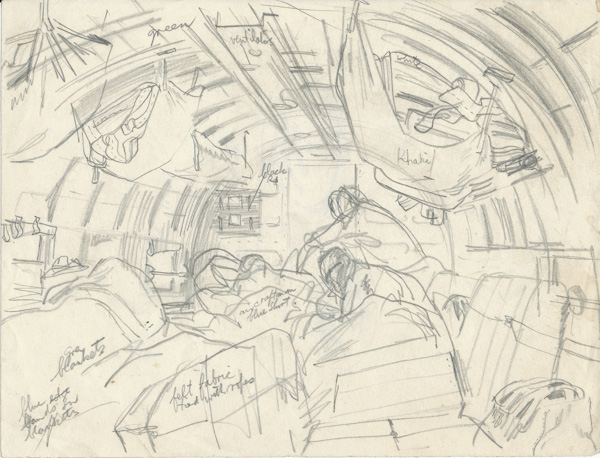
Early morning transport plane
Interior of a Douglas C47 transport plane
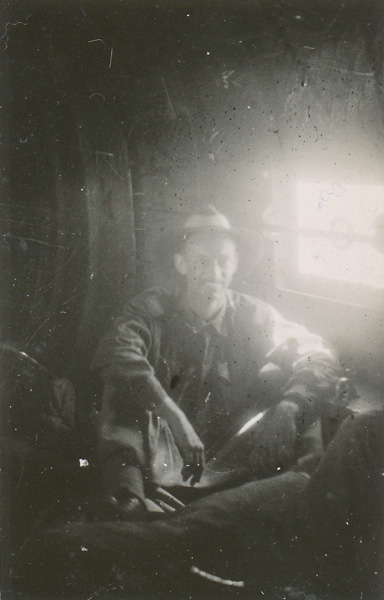
Wep sitting amongst the mail bags on a Douglas C47 transport pla
Wep sitting amongst the mail bags on a Douglas C47 transport plane

War Letters Back Home – from Northern Australia, Papua New Guinea, Morotai and Borneo

During WW2, William Edwin Pidgeon (Wep) was a War Correspondent for The Australian Women’s Weekly. Between 1943 and 1945, Bill was attached to the Australian troops in Northern Australia, Papua New Guinea, Borneo and Morotai where he was situated when hostilities ceased in August 1945. In his work he recorded the daily lives of the men, women and natives around the camps, field hospitals, race meetings, church parades and some famous battle scenes. As a participant in their lives he drew and painted his subjects with a marked sense of involvement and an unmistakably Australian feeling of casualness. There is no straining after effect in his compositions, which are almost always of groups of figures in their appropriate settings. Their style is quite opposite to the style of the official war artist’s portrayal of troops in heroic action. The paintings are usually small in size, with a limited colour palette and restricted by what material was available on the run.

The following is a collection of letters to his wife, Jess, during these trips; letters composed in similar vein to his painting, yet full of visual verbal description describing life amongst the troops complete with illustrations scattered throughout.

error: Content is protected !!